Commercial roofing systems are massive investments. For property managers and industrial facility owners in Southwest Florida, maintaining these assets is a constant battle against intense UV radiation, high humidity, and seasonal storm surges. Most roofing failures don't happen overnight: they are the result of cumulative errors in maintenance strategy.
Traditional "boots on the roof" inspections are often reactive, incomplete, and dangerous. By the time a leak is visible inside the warehouse, the damage to the substrate and insulation is already extensive. Transitioning to a thermal-first drone inspection workflow changes the math.
Here are the seven most common mistakes in commercial roof maintenance and how Cape UAV utilizes enterprise-grade thermal technology to eliminate them.
1. Relying Solely on Visual Inspections
The most dangerous assumption in roof maintenance is that if it looks good, it is good. A visual inspection only identifies surface-level issues like membrane tears or loose flashing. It cannot see what is happening beneath the surface where structural integrity is actually compromised.
Why This Matters
Water often travels far from the point of entry. A puncture in one corner of a 50,000-square-foot roof might result in a leak 100 feet away because the water follows the pitch of the internal decking. Visual inspections frequently miss the source of the problem entirely.
The Thermal Drone Solution
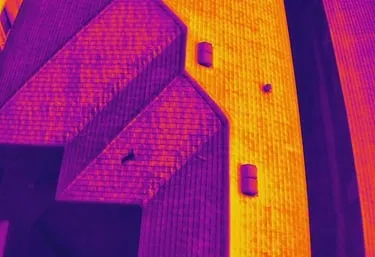
Cape UAV utilizes the Autel Robotics EVO Lite 6T Enterprise (EVO Lite 640T). This platform features a high-resolution 640×512 thermal sensor. Because water has a higher thermal mass than dry insulation, it retains heat longer after the sun goes down. As the roof cools in the evening, trapped moisture glows "hot" on our thermal displays.
- 12um Pixel Pitch: Our sensors provide the fine-grained detail necessary to distinguish between a small moisture pocket and a general heat signature.
- Precision Detection: We identify anomalies that the human eye simply cannot perceive.
ROI Advantage: Identifying a 10-foot area of wet insulation today prevents a 1,000-square-foot replacement next year.
2. Overlooking Entrapped Moisture
Entrapped moisture is the "silent killer" of commercial flat roofs. When water gets trapped between the membrane and the roof deck, it begins to rot the insulation and corrode the fasteners.
The Consequences of Neglect
- Reduced R-Value: Wet insulation loses its ability to regulate temperature, causing HVAC costs to skyrocket.
- Structural Deck Rot: Long-term moisture leads to structural failure of the metal or wood decking.
- Mold Growth: Creates indoor air quality issues and significant legal liability.
Why Thermal Drones Win
Traditional moisture probes require physically puncturing the roof membrane to take a reading. This is counterproductive. Our thermal imaging services are entirely non-destructive. We capture the thermal signature of the entire roof in a single flight, mapping out moisture plumes with surgical precision.
3. Excessive Foot Traffic During Inspections
Every time a technician walks on a commercial roof, they risk causing damage. Tools get dropped, heavy boots stress the membrane, and safety equipment can scrape protective coatings.
The Risk Factor
In Southwest Florida’s heat, membranes become more pliable and susceptible to puncture. Furthermore, manual inspections require ladders, lifts, and fall-protection gear: all of which increase the liability profile of the maintenance task.
The Aerial Advantage
Drones eliminate the need for people to walk the roof. We can inspect 100,000 square feet of roofing in under an hour without a single foot touching the surface.
| Feature | Manual Inspection | Thermal Drone Inspection |
|---|---|---|
| Safety Risk | High (Fall potential) | Zero (Remote operation) |
| Speed | 4-6 Hours | < 1 Hour |
| Surface Impact | Physical wear/tear | Non-contact |
| Data Quality | Subjective notes | High-res 50MP visual & 640T Thermal |
4. Ignoring Drainage and Ponding Water
Ponding water: water that remains on a roof for more than 48 hours: is a leading cause of premature roof failure. It adds immense weight to the structure and accelerates the degradation of the membrane through UV magnification.
Why This Matters
Ponding is often caused by subtle changes in the roof's slope or clogged internal drains. Often, these issues are invisible from the ground and hard to quantify from a ladder.
The Mapping Solution
Beyond thermal, Cape UAV provides high-resolution drone mapping. We create orthomosaic maps and 3D models that help property managers visualize drainage patterns. By identifying where water collects, maintenance crews can proactively clear drains or plan for tapered insulation during the next repair cycle.
Important Disclaimer: Our data is for planning purposes and is not a substitute for a licensed land survey.
5. Reactive vs. Proactive Repair Cycles
Many businesses wait for a ceiling tile to turn brown before calling a roofer. This is the most expensive way to manage a facility. Reactive repairs are emergency-priced and often involve secondary damage to equipment or inventory inside the building.
Proactive Thermal Scans
By implementing a bi-annual thermal scan, you create a baseline for your roof's health. You can track the progression of small "hot spots" and repair them during scheduled maintenance windows, avoiding emergency call-out fees.
Technical Specifications of the EVO Lite 640T:
- Dual Camera System: Simultaneously captures visual and thermal data.
- 640×512 Resolution: High enough to spot failing seams and flashing gaps.
- 50MP Visual Camera: Provides crystal-clear 4K imagery to verify physical damage like hail strikes or wind uplift.
6. Lack of Verifiable Documentation
When it comes time to file an insurance claim after a Florida hurricane, having "before" photos is critical. Most maintenance records consist of a few blurry cell phone pictures and a handwritten invoice.
The Digital Twin Approach
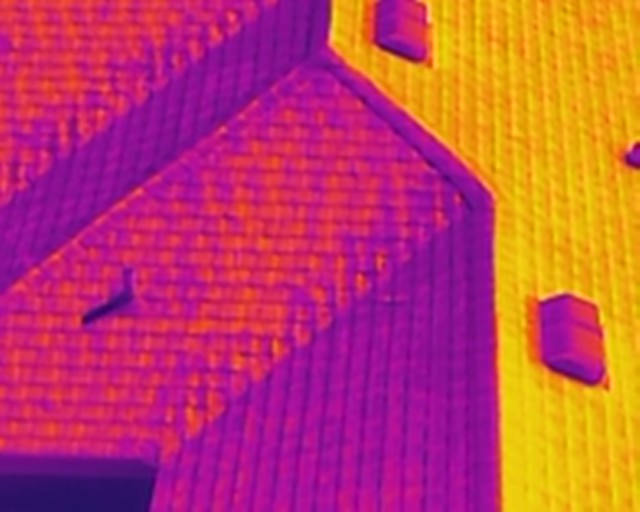
Cape UAV provides a comprehensive digital record of your asset. We deliver high-resolution orthomosaics: essentially a Google Earth-style view of your specific roof: that allows you to zoom in and see every screw, seam, and HVAC unit in stunning detail.
Why It Matters for B2B
If you are selling a commercial property or seeking financing, a professional industrial drone report provides the buyer with confidence in the building’s envelope. It removes the guesswork from the due diligence process.
7. Hiring Uncertified or Non-Technical Operators
The "neighbor with a drone" is not a commercial inspection solution. Professional thermal drone work requires more than just flying; it requires an understanding of thermography and strict adherence to FAA regulations.
The Cape UAV Standard
- FAA Part 107 Certified: All missions are flown in full compliance with federal law, ensuring your business is protected from liability.
- Enterprise Equipment: We do not use consumer drones. The Autel EVO Lite 6T Enterprise is purpose-built for the rigors of industrial inspection.
- Local Expertise: Based in Cape Coral, we understand the specific environmental stressors of Southwest Florida.
Important Disclaimer: Thermal results indicate anomalies and are not a substitute for evaluation by a licensed professional.
The Financial Case for Thermal Drone Inspections
The cost of a drone-based roof inspection is a fraction of the cost of a traditional moisture survey, and an even smaller fraction of a roof replacement. For a typical commercial warehouse in Cape Coral, a thermal scan can be completed in a single morning, providing the owner with a clear roadmap of necessary repairs.
ROI Summary:
- Labor Savings: Reduce man-hours spent on roof walks.
- Energy Efficiency: Identify wet insulation to support climate control efficiency.
- Asset Extension: Prolong the life of the existing roof by 5–10 years through targeted repairs.
- Liability Reduction: Eliminate the risks associated with ladders and rooftop work.
Whether you are managing a retail plaza, an industrial warehouse, or a luxury multi-family complex, thermal drones provide the clarity, confidence, and control you need over your facility maintenance.
If you’re ready to see what’s happening beneath your roof’s surface, contact Cape UAV today for a technical consultation. We specialize in providing the data you need to protect your most valuable assets.
Important Disclaimer
- Thermal Disclaimer: Thermal results indicate anomalies and are not a substitute for evaluation by a licensed professional.
- Mapping Disclaimer: Our data is for planning purposes and is not a substitute for a licensed land survey.
- Equipment Disclaimer: Autel Robotics is a trademark of its respective owner; Cape UAV is not affiliated with or endorsed by Autel Robotics. Equipment includes models such as the Autel Robotics EVO Lite 6T Enterprise. Results depend on environmental and site conditions.
For more information on our full suite of services, visit our drone services page or explore our frequently asked questions.