
Thermal imaging uses infrared technology to detect temperature variations invisible to the naked eye: revealing hidden moisture, insulation failures, and air leaks across commercial roof surfaces before they become visible damage. For property managers and building owners across Southwest Florida, aerial thermal imaging identifies opportunities for efficiency that reduce utility costs, prevent catastrophic failures, and extend roof service life without requiring invasive inspections or facility downtime.
Traditional roof inspections rely on visual assessment and physical access: both time-intensive and limited in scope. Thermal imaging from drone inspection services covers tens of thousands of square feet in minutes, creating a complete thermal signature of your facility that pinpoints exactly where energy loss and structural compromise occur.
How Thermal Imaging Detects Hidden Roof Problems
Thermal cameras capture infrared energy emitted by objects based on their temperature. When moisture penetrates roofing materials, trapped water changes the thermal properties of insulation and decking: absorbing heat during the day and releasing it slowly at night. These temperature differentials appear as distinct patterns in thermal imagery, revealing the precise location and extent of moisture intrusion beneath the roof membrane.
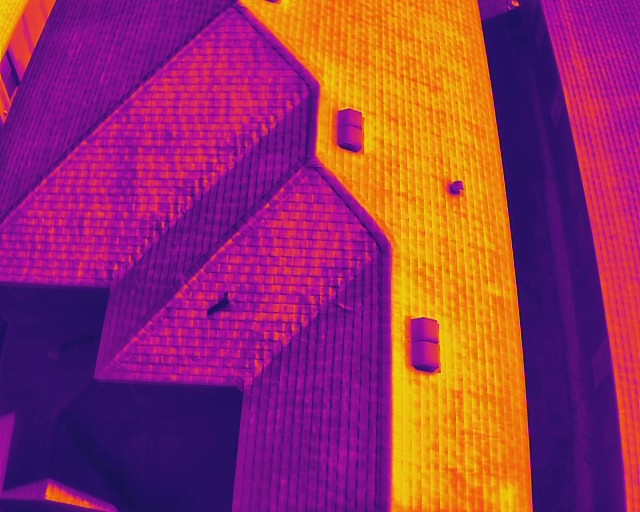
The same principle applies to insulation deficiencies. Areas where insulation has compressed, shifted, or degraded show temperature variations that indicate energy loss. Air leaks around HVAC penetrations, skylights, and seam failures create thermal signatures distinct from surrounding areas: flagging efficiency problems before they escalate into structural damage or runaway utility costs.
Why Aerial Thermal Imaging Outperforms Traditional Methods
Ground-based thermal inspection requires physical access to every section of a commercial roof: a process limited by safety concerns, equipment availability, and the sheer size of modern commercial facilities. Roof inspection drone technology eliminates these constraints.
Key advantages:
- Complete coverage : Scan 50,000+ square feet in a single flight without ladders, lifts, or personnel on the roof
- Non-invasive analysis : Detect subsurface problems without cutting, coring, or damaging existing membranes
- Consistent data collection : Uniform flight altitude and sensor angle create comparable thermal maps over time
- Immediate identification : Thermal anomalies appear in real-time, enabling same-day reporting and decision-making
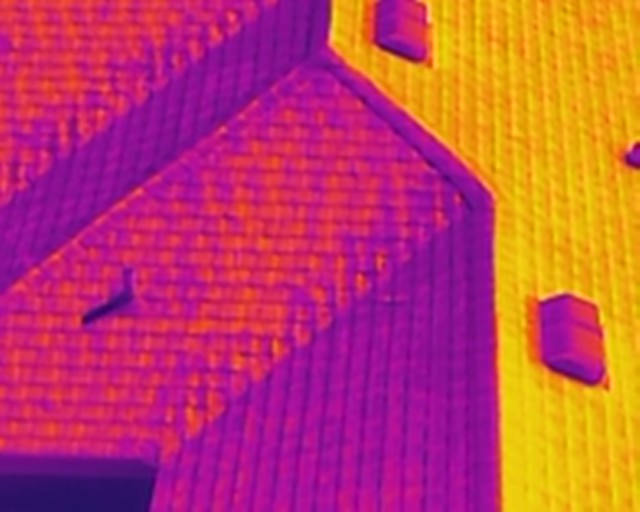
What Thermal Imaging Reveals About Your Commercial Roof
Moisture Intrusion and Leak Pathways
Even small, undetected leaks cause severe damage over months. Water migrates laterally beneath roof membranes, saturating insulation far beyond the original penetration point. Thermal imaging reveals the full extent of moisture damage: not just where water enters, but where it has traveled and accumulated within roof assemblies.
This precision prevents unnecessary tear-offs. Rather than replacing entire roof sections based on visual estimates, building owners replace only compromised materials. The cost savings compound when dry, functioning areas remain in place: reducing removal expenses, disposal fees, and project timelines.
Insulation Performance Failures
Poor insulation drives up cooling costs across Southwest Florida's long summer months. Thermal imaging identifies where insulation has failed: whether from moisture damage, compression, or improper installation. These thermal signatures show exactly which roof areas lose conditioned air, enabling targeted insulation upgrades with measurable energy savings.
For facilities with high energy bills, thermal baseline documentation supports long-term maintenance planning. Comparing thermal scans over time tracks insulation degradation and helps property managers budget for efficiency improvements based on actual performance data, not guesswork.
Air Leak Detection Around Penetrations
Commercial roofs house numerous penetrations: HVAC units, exhaust vents, plumbing stacks, electrical conduits, and skylights. Each penetration represents a potential air leak pathway. Thermal imaging detects temperature differences around these penetrations that indicate seal failures and air infiltration: problems that waste energy and accelerate membrane degradation around flashing details.
Early detection of these thermal anomalies prevents minor seal failures from becoming major water intrusion events. The cost to reseal a penetration is negligible compared to repairing water-damaged decking, insulation, and interior finishes.
ROI: How Thermal Imaging Reduces Roof Ownership Costs
The investment in aerial thermal scans delivers returns that exceed scan costs by multiples: often within a single maintenance cycle.
Cost avoidance through early detection:
- Prevent catastrophic failure : Catching moisture problems early avoids full roof replacement projects that cost hundreds of thousands on large commercial facilities
- Targeted repairs instead of tear-offs : Replace only damaged sections rather than entire roof areas, reducing material and labor expenses by 40-60%
- Lower energy bills : Identifying and addressing insulation failures and air leaks reduces cooling loads, with savings that accumulate month after month
- Minimize operational disruption : Smaller, targeted repair projects complete faster and impact building operations less than major roof replacements
Long-term maintenance advantages:
Thermal imaging creates a documented baseline of your roof's condition. Regular thermal scans: conducted annually or after major weather events: track how your roof performs over time. This data-driven approach to roof maintenance enables predictive budgeting, supports warranty documentation, and demonstrates proactive property stewardship to ownership groups and investors.
Real-World Efficiency Gains
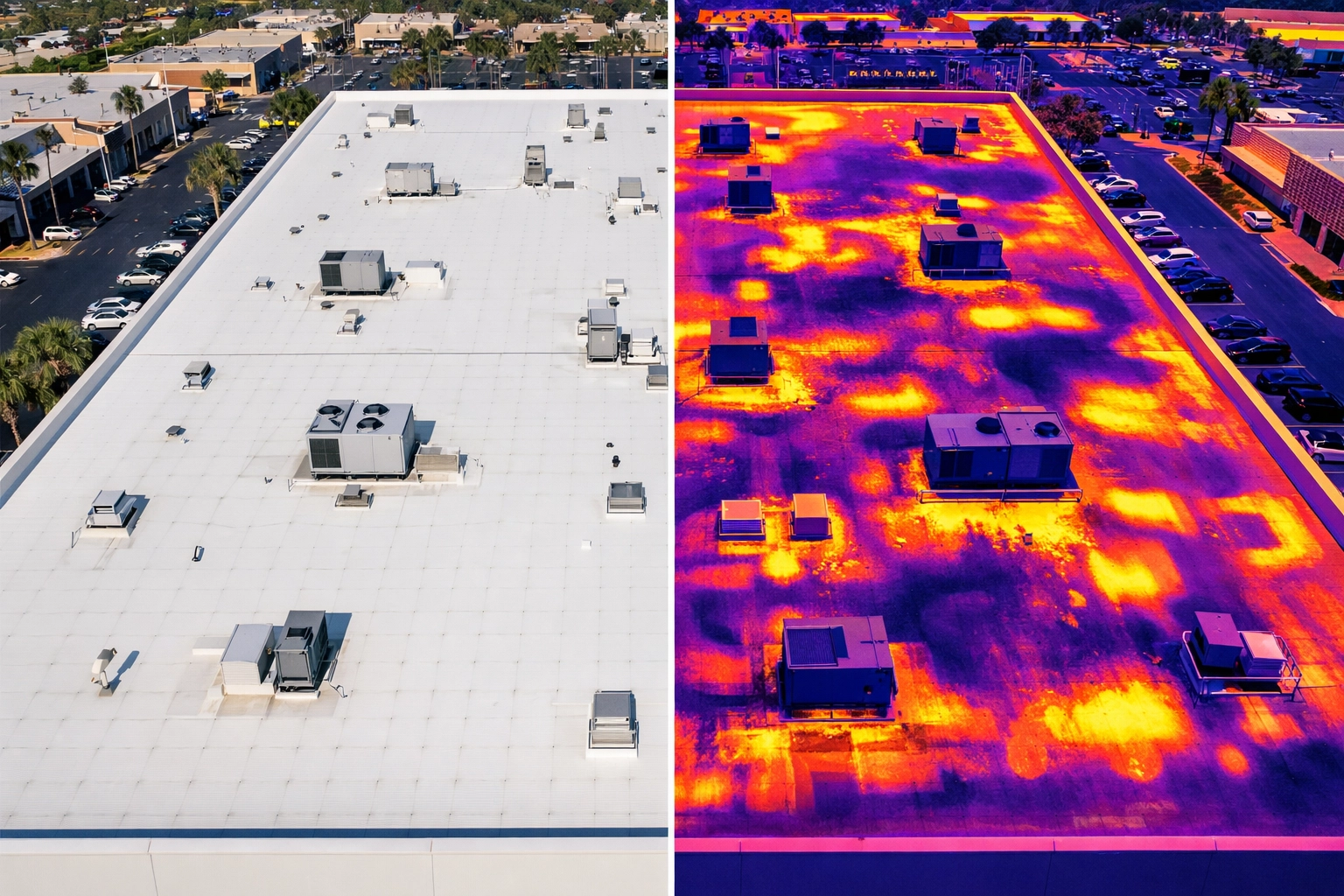
Consider a 75,000-square-foot retail facility with areas of compromised insulation identified through thermal imaging. Targeted insulation replacement in those specific zones: rather than a facility-wide insulation project: costs a fraction of total roof renovation while delivering immediate efficiency improvements. The facility reduces cooling costs while extending the service life of undamaged roof sections.
For property management groups with multiple commercial buildings, thermal imaging supports portfolio-wide efficiency planning. Prioritize buildings with the most significant thermal anomalies for maintenance investment: allocating capital where it delivers the greatest impact on energy performance and asset protection.
Why Southwest Florida Commercial Properties Need Thermal Imaging
Southwest Florida's climate accelerates roof degradation. Intense UV exposure, afternoon thunderstorms, and humidity create conditions where small roof defects rapidly escalate. Thermal imaging identifies these developing problems during the critical window when intervention remains cost-effective.
The region's flat-roof commercial architecture: warehouses, retail centers, office complexes, and industrial facilities: relies on membrane roofing systems particularly vulnerable to moisture intrusion. Standing water from inadequate drainage, punctures from foot traffic and equipment, and seal failures around penetrations all appear as thermal signatures before causing visible interior damage.
Additional thermal applications for commercial facilities:
Beyond roofing, thermal imaging assesses mechanical systems on roof surfaces. HVAC equipment, generators, electrical panels, and solar installations all produce thermal signatures that indicate performance issues. Overheating electrical connections, refrigerant leaks, and inefficient mechanical operation become visible: supporting comprehensive facility management and preventing equipment failures that disrupt business operations.
Cape UAV's Thermal Imaging Capabilities
Our thermal imaging services utilize the Autel Robotics EVO Lite 6T Enterprise (EVO Lite 640T), equipped with a 640×512 thermal sensor and a 50MP visual camera. This dual-sensor configuration captures high-resolution thermal and visual imagery simultaneously: creating detailed documentation that shows both what thermal anomalies look like on the surface and their precise thermal characteristics.
The 640×512 resolution provides the thermal detail necessary for accurate anomaly identification across large commercial roof surfaces. This enterprise-grade equipment delivers consistent, reliable thermal data that supports maintenance decisions and contractor coordination.
Note: Autel Robotics is a trademark of its respective owner. Cape UAV is not affiliated with or endorsed by Autel Robotics.
Supporting Proactive Roof Management in Cape Coral and Beyond
Thermal imaging transforms commercial roof maintenance from reactive repairs to proactive efficiency management. Instead of waiting for visible leaks or addressing problems only after interior damage occurs, property managers gain visibility into roof performance while intervention remains straightforward and cost-effective.
For commercial property owners across Cape Coral, Fort Myers, Naples, and Southwest Florida, aerial thermal imaging identifies opportunities for efficiency that protect real estate investments, reduce operating costs, and extend the service life of critical building systems. The data captured during thermal missions supports immediate repair decisions and long-term capital planning: giving property management teams clarity, confidence, and control over their roofing assets.
Important Disclaimer
Thermal results indicate anomalies and are not a substitute for evaluation by a licensed professional.
Interested in thermal imaging for your commercial facility? Contact Cape UAV to discuss how aerial thermal imaging supports your property management goals, or visit our thermal imaging services page to learn more about our capabilities across Southwest Florida.
Important Disclaimer
Thermal results indicate anomalies and are not a substitute for evaluation by a licensed professional.