
Thermal drone inspections use infrared cameras mounted on unmanned aircraft to detect temperature variations across building envelopes: revealing hidden moisture infiltration, insulation failures, air leaks, and HVAC inefficiencies that are invisible to the naked eye. For property managers and facility owners in Southwest Florida's humid, sun-intense climate, these inspections deliver actionable intelligence about building performance before minor issues escalate into costly structural damage or energy waste.
Cape UAV deploys the Autel Robotics EVO Lite 640T with a 640×512 thermal sensor and 50MP visual camera to capture high-resolution thermal and RGB imagery of commercial building exteriors, rooftops, and mechanical systems across Cape Coral, Fort Myers, and surrounding regions. This enterprise-grade platform identifies thermal anomalies from a safe distance: eliminating the need for scaffolding, lift equipment, or personnel working at height while delivering wall-to-wall building data in a fraction of the time required by traditional inspection methods.
Why Building Envelope Integrity Matters in Southwest Florida
Commercial buildings in Cape Coral and Fort Myers face year-round thermal stress from intense solar gain, afternoon thunderstorms, and high humidity that accelerates hidden deterioration. Most costly failures begin as invisible issues: trapped moisture behind facades, compromised insulation in roof assemblies, or undetected air infiltration around mechanical penetrations.
Traditional visual inspections miss these problems until they produce visible symptoms: water stains, mold growth, or spiking energy bills. By that point, remediation costs multiply. Thermal imaging detects temperature differentials of less than one degree: exposing problems at the earliest stage when repairs are least expensive and most effective.
How Thermal Drone Technology Works
Infrared cameras detect thermal radiation emitted by building surfaces and convert it into color-coded images that represent temperature variations. The Autel EVO Lite 640T's 640×512 thermal sensor captures 327,680 individual temperature data points per frame: producing imagery detailed enough to isolate individual HVAC vents, roof membrane seams, and window frames.
During flight operations, the drone follows programmed paths that maintain consistent standoff distance and overlapping coverage. Pilots capture both thermal and high-resolution visual imagery simultaneously, allowing direct comparison between infrared anomalies and their physical locations on the building. Post-flight processing generates annotated reports that pinpoint affected areas, measure their extent, and prioritize remediation based on severity.
What Thermal Inspections Reveal
Moisture Intrusion and Water Damage
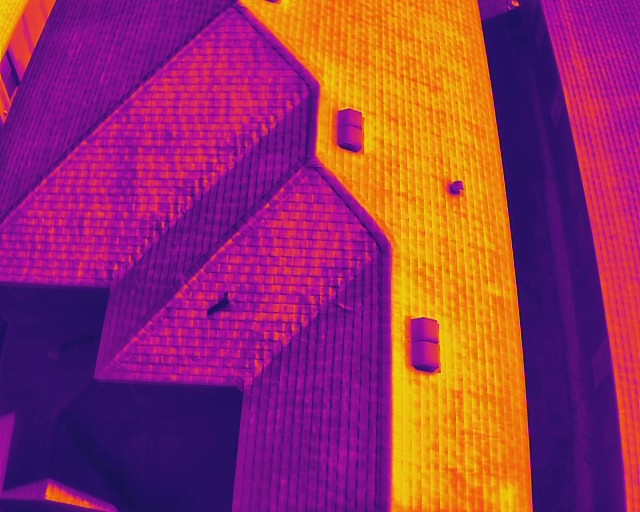
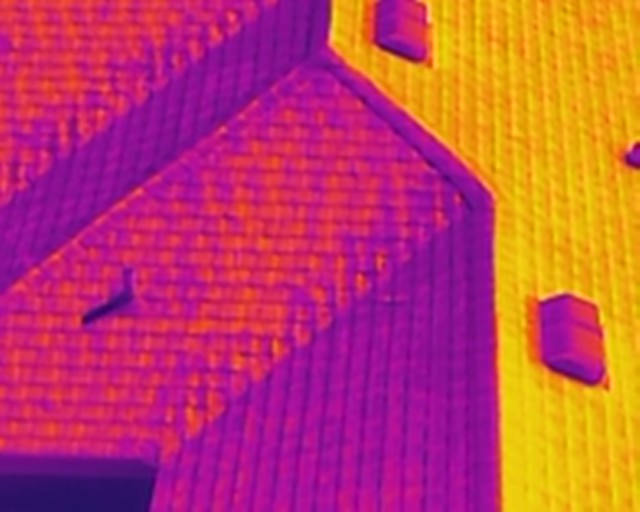
Water trapped in wall cavities, beneath roofing membranes, or around window installations appears as distinct thermal signatures: cooler zones where evaporative cooling occurs or warmer areas where wet insulation has lost its thermal resistance. In Southwest Florida's climate, moisture detection prevents mold proliferation, structural rot, and indoor air quality degradation before occupants notice symptoms.
Insulation Failures and Thermal Bridging
Missing, compressed, or improperly installed insulation creates visible heat loss patterns in winter months and heat gain patterns during cooling season. Thermal imagery clearly shows where conditioned air escapes through envelope gaps: identifying opportunities to reduce HVAC load and lower utility costs. Thermal bridging through structural members becomes immediately apparent, allowing targeted upgrades to the most problematic areas first.
Air Leakage and Infiltration Points
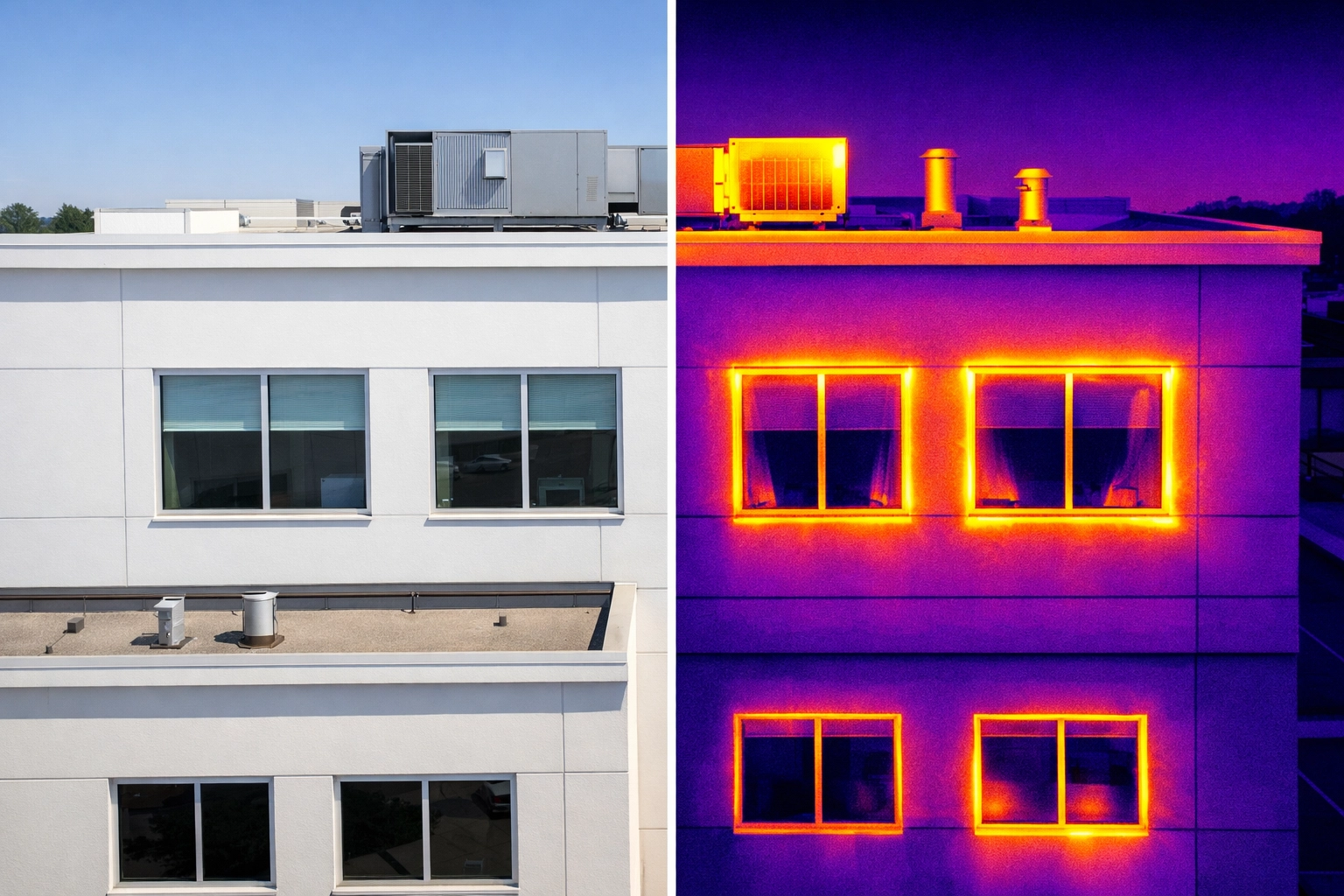
Uncontrolled air movement through building envelopes forces HVAC systems to work harder and creates pressure imbalances that draw humid outside air into conditioned spaces. Thermal scans conducted during temperature differentials: ideally when indoor and outdoor conditions differ by at least 20°F: reveal air leakage around door assemblies, window perimeters, and mechanical penetrations that would otherwise require destructive testing to locate.
HVAC System Performance Issues
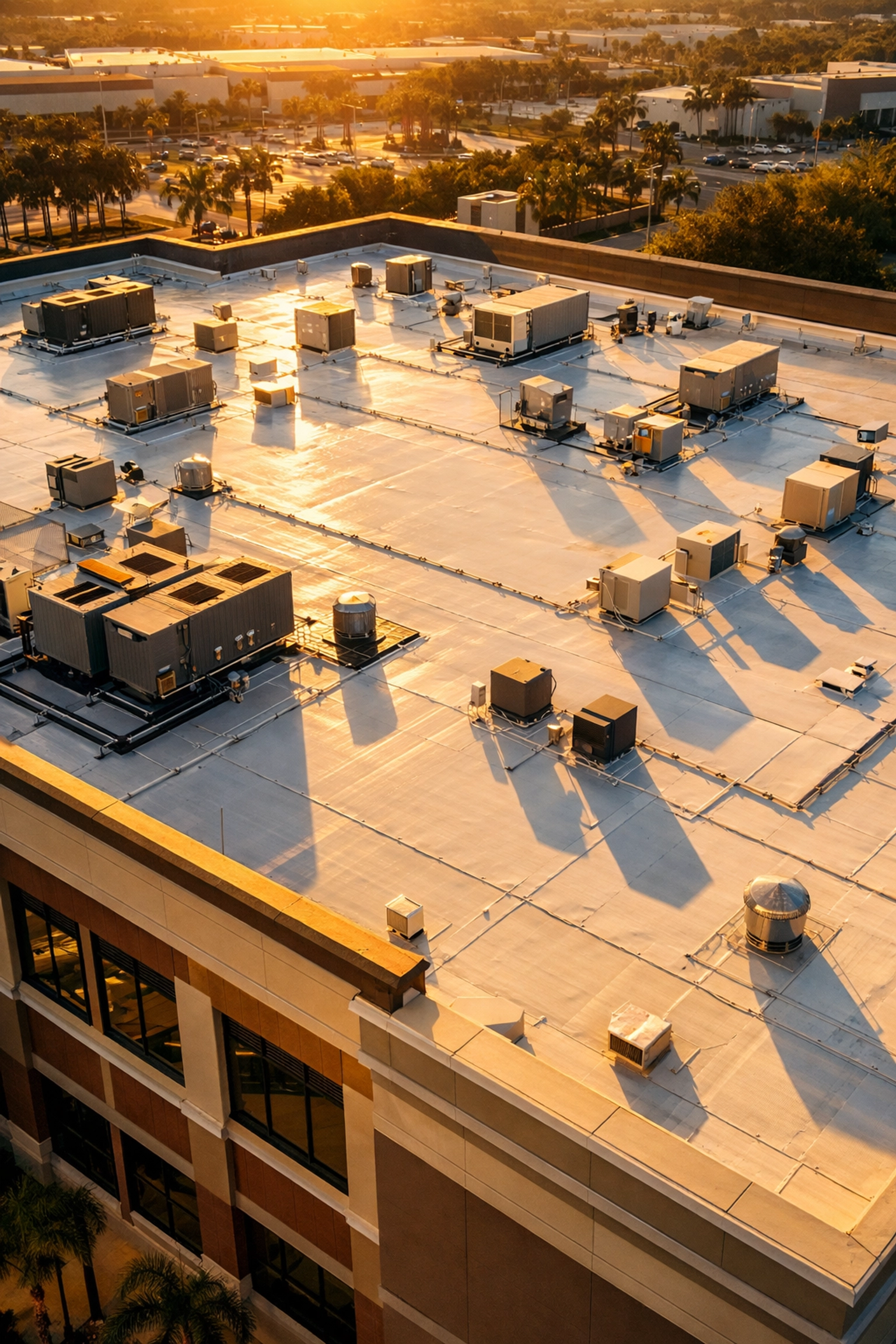
Rooftop units, condenser arrays, and distribution systems produce distinct thermal signatures that reveal operating efficiency. Hot spots on electrical connections signal resistance issues before they cause failures. Uneven cooling across coil surfaces indicates refrigerant flow problems. Ductwork temperature patterns show where insulation has degraded or where leakage wastes conditioned air into unconditioned spaces.
The Southwest Florida Advantage: Climate-Driven ROI
Building envelopes in Cape Coral and Fort Myers operate under conditions that accelerate both thermal stress and moisture-related deterioration. Summer roof surface temperatures exceed 160°F while indoor spaces maintain 72°F: creating temperature differentials that make thermal anomalies exceptionally clear during afternoon inspections.
High humidity and frequent rain events mean moisture intrusion consequences are more severe and more immediate than in arid climates. A small roof penetration leak in Phoenix might take years to cause structural damage; the same leak in Fort Myers can produce mold and wood rot within months. Early detection through thermal imaging protects long-term building investments and prevents emergency repairs that disrupt operations.
Property managers overseeing multiple facilities benefit from systematic thermal inspection programs that establish baseline conditions and track envelope performance over time: identifying deterioration trends before they require capital-intensive interventions.
Traditional Methods vs. Thermal Drone Inspections
| Aspect | Traditional Handheld Inspection | Thermal Drone Inspection |
|---|---|---|
| Coverage | Limited to accessible areas; requires scaffolding or lifts for upper floors | Complete building envelope including rooftops and upper facades |
| Safety | Workers at height; fall protection required | Ground-based operations; no personnel exposure |
| Time Required | Days to weeks for large commercial buildings | Hours for complete multi-story facility capture |
| Data Density | Spot measurements; sampling approach | Wall-to-wall thermal mapping; no gaps in coverage |
| Documentation | Manual notes; limited imagery | Georeferenced thermal and visual imagery; annotated reports |
| Operational Disruption | Requires access to occupied spaces; may interrupt business | Exterior inspections with zero interior access needed |
ROI Through Preventative Maintenance
Thermal drone inspections shift building maintenance from reactive to proactive: catching problems when repair costs are measured in hundreds or thousands of dollars rather than tens of thousands. A flat roof replacement on a 50,000-square-foot commercial building runs $250,000 to $400,000 in Southwest Florida; early detection of isolated membrane failures allows targeted repairs for a fraction of that cost.
Energy efficiency improvements identified through thermal imaging pay for themselves through reduced utility bills. A commercial facility spending $50,000 annually on cooling costs can see 10-20% reductions by addressing air leakage and insulation deficiencies revealed in thermal scans. The inspection investment recovers within the first year through avoided HVAC runtime alone.
Insurance and liability protection represents another ROI component. Documented thermal inspections demonstrate due diligence in building maintenance: valuable evidence if moisture-related claims arise. Property managers can also use thermal data to prioritize capital improvement budgets and defer non-critical work until economically optimal timing.
Implementation Best Practices
Optimal Inspection Timing
Schedule thermal inspections when indoor-outdoor temperature differentials maximize thermal contrast: early morning or late afternoon during cooling season, or midday during winter months when HVAC systems operate. Avoid inspections during or immediately after rain events, as wet surfaces create thermal signatures unrelated to building deficiencies.
Establishing Baselines
Initial thermal scans create reference conditions against which future inspections are compared. Annual or biannual follow-up inspections track envelope performance over time and detect gradual deterioration that would otherwise go unnoticed until failure occurs.
Integration with Maintenance Programs
Thermal findings feed directly into preventative maintenance scheduling: allowing facility teams to address issues during planned downtime rather than emergency response scenarios. Prioritization based on thermal severity ensures limited maintenance budgets focus on areas with the greatest risk or inefficiency impact.
Equipment Specifications and Capabilities
The Autel Robotics EVO Lite 640T delivers enterprise-grade thermal imaging in a deployable platform suited to Southwest Florida's coastal wind conditions and frequent weather variability. The 640×512 thermal sensor resolution exceeds entry-level thermal cameras by 4x: providing detail sufficient to identify individual fastener points, seam failures, and localized anomalies on complex building envelopes.
Simultaneous 50MP visual imagery ensures thermal anomalies can be precisely located on building facades and roof assemblies: critical for remediation teams who need exact coordinates for targeted repairs. Flight endurance exceeds 30 minutes per battery, allowing complete coverage of large commercial facilities in single missions.
Important Disclaimer
Thermal imaging results indicate temperature anomalies and potential building envelope concerns. These findings are not a substitute for evaluation by a licensed building inspector, engineer, or other qualified professional. Thermal data supports decision-making but does not replace professional assessment of structural, mechanical, or building system conditions.
Taking Action on Thermal Intelligence
Property managers and facility owners who implement regular thermal inspection programs gain clarity, confidence, and control over building performance. Hidden problems become visible. Maintenance decisions rely on data rather than guesswork. Capital improvement budgets focus on areas where intervention delivers the greatest return.
For commercial properties in Cape Coral, Fort Myers, and throughout Southwest Florida, thermal drone inspections identify opportunities for efficiency while protecting buildings from moisture damage, energy waste, and premature system failures. The technology turns building envelopes into monitored systems: revealing exactly where investment is needed and where performance remains strong.
Discover how thermal imaging can protect your commercial properties and reduce operating costs. Visit Cape UAV's thermal imaging services or contact our team to schedule a building envelope assessment.
Important Disclaimer
Thermal imaging results indicate temperature anomalies and potential building envelope concerns. These findings are not a substitute for evaluation by a licensed building inspector, engineer, or other qualified professional. Thermal data supports decision-making but does not replace professional assessment of structural, mechanical, or building system conditions.
Autel Robotics is a trademark of its respective owner; Cape UAV is not affiliated with or endorsed by Autel Robotics. Inspection results depend on environmental conditions, equipment specifications, and site-specific factors.