
Yes. Thermal imaging works: and it’s transformed how property managers and facility maintenance teams identify roof problems before they turn into catastrophic failures.
Thermal imaging detects hidden roof damage by using infrared cameras to identify temperature variations across roof surfaces. Trapped moisture, damaged insulation, and membrane failures retain heat differently than dry, intact materials. These temperature differences create distinct thermal signatures that reveal problems invisible to the naked eye.
The question isn’t whether thermal imaging works. The question is why more property owners aren’t using it before they’re facing five-figure emergency repairs.
How Thermal Imaging Reveals What Visual Inspections Miss
Traditional roof inspections rely on visible damage: cracked shingles, obvious pooling water, or stains on interior ceilings. By the time these signs appear, the damage is already extensive.
Thermal imaging sees beneath the surface. Infrared cameras mounted on enterprise-grade drones detect heat patterns that indicate moisture intrusion, insulation breakdown, and structural weaknesses long before visual symptoms emerge.
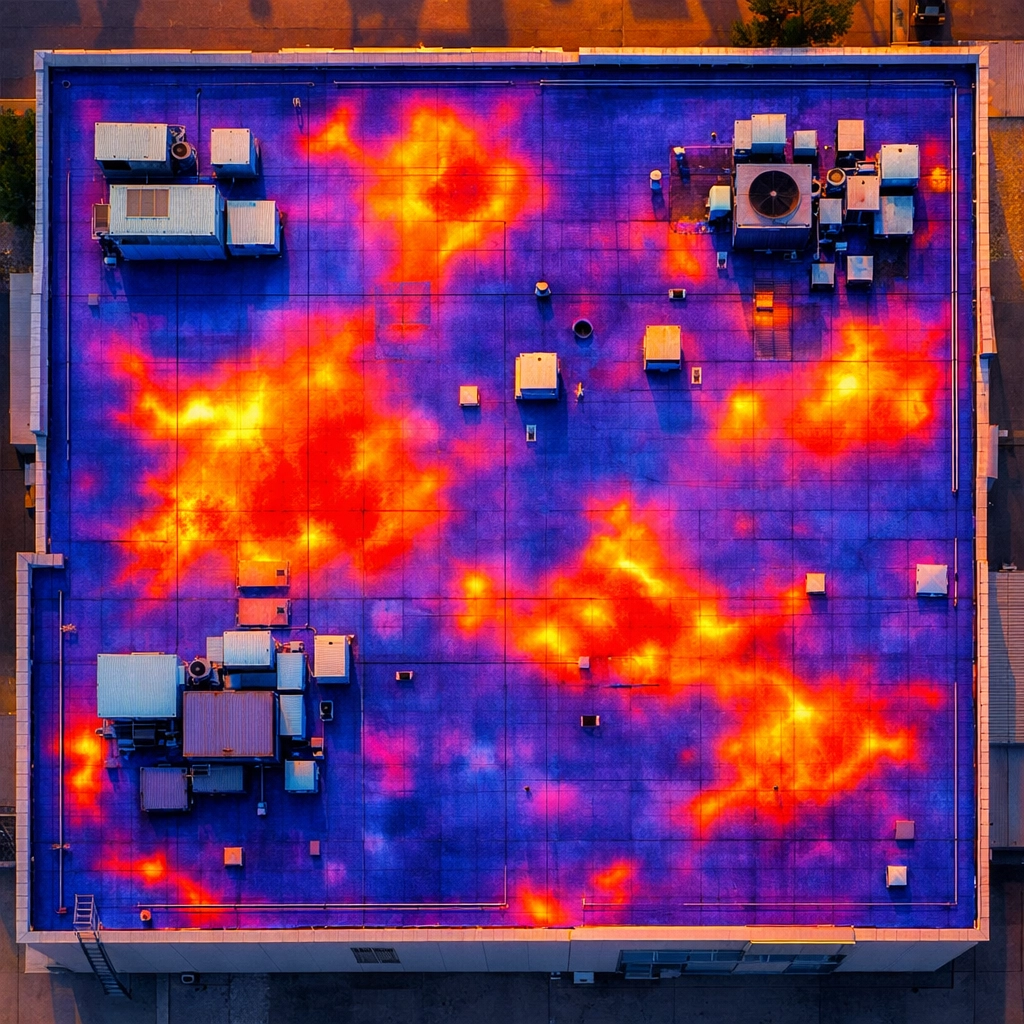
Here’s what happens: wet insulation conducts heat faster than dry insulation. When moisture penetrates a roof membrane: whether from a small puncture, failed flashing, or deteriorated seam: it saturates the underlying insulation. During temperature transitions (early morning or late afternoon work best), these saturated areas show distinct thermal patterns that stand out clearly on infrared imagery.
The technology doesn’t guess. It measures actual temperature differentials across your entire roof surface and documents them with precision imaging.
What Thermal Roof Inspections Detect
A comprehensive thermal imaging inspection reveals multiple failure modes that lead to expensive repairs:
Moisture intrusion and trapped water – The most common and costly issue. Moisture under membranes shows as cooler areas during the day or warmer areas at night. Even small amounts of trapped moisture appear clearly in thermal scans.
Insulation degradation – Wet or compressed insulation loses R-value and creates thermal bridges. These show as distinct temperature variations that pinpoint exactly where insulation has failed.
Membrane delamination – When roofing membranes separate from substrates, air pockets create thermal anomalies. Catching delamination early prevents water intrusion and extends membrane life.
Active leaks before interior damage – Thermal imaging identifies the exact entry point of active leaks, even when interior symptoms haven’t appeared yet. This enables surgical repairs instead of exploratory tear-offs.
Heat loss and energy inefficiency – Beyond structural problems, thermal scans reveal where conditioned air escapes through your roof assembly. These inefficiencies cost money every month in wasted energy.
Why Traditional Inspection Methods Fall Short
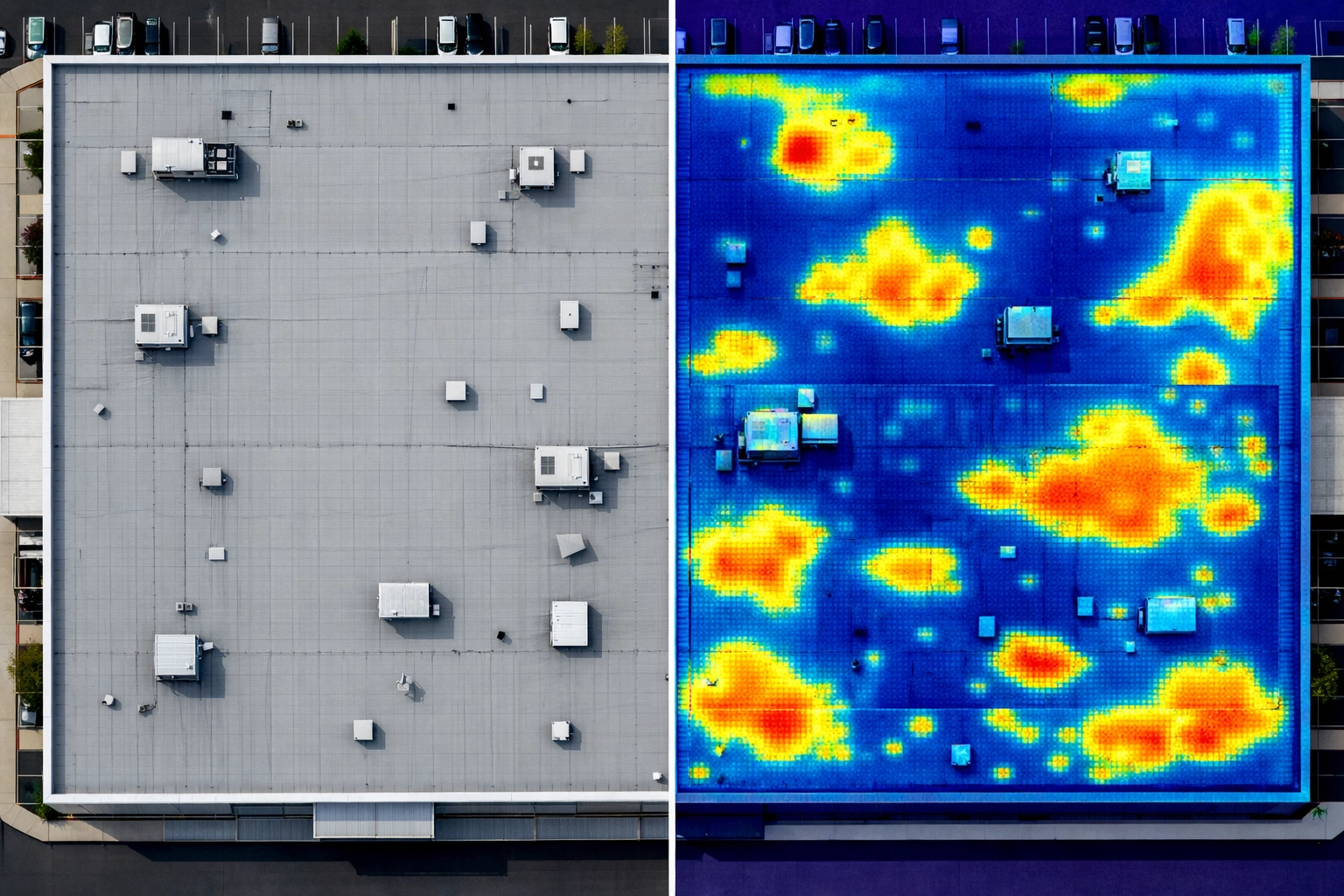
Visual roof inspections require someone walking the entire roof surface, looking for obvious damage signs. This approach has fundamental limitations.
Coverage gaps. Even experienced inspectors can’t see moisture trapped beneath membranes or insulation failures hidden under intact surfaces. They’re limited to what’s visible: cracks, blisters, punctures, or standing water.
Time consumption. Manually inspecting large commercial roofs takes days. Many areas may never receive close examination, especially on buildings with multiple roof levels or difficult access points.
Physical risk. Walking roofs introduces safety concerns and potential damage from foot traffic. Every inspection risks creating the very problems it’s trying to find: especially on aging or brittle membrane systems.
Destructive testing requirements. When traditional inspections suspect moisture issues, they often require cutting into the roof assembly to confirm. Each test cut creates a potential leak point and requires proper sealing.
Thermal imaging eliminates these limitations entirely. A complete thermal roof scan takes hours instead of days, covers 100% of accessible roof surfaces, and never requires physical contact with the roofing system.
The Technology Behind Accurate Thermal Roof Inspections
Not all thermal imaging delivers the same results. The quality of data depends entirely on equipment capability and operator expertise.
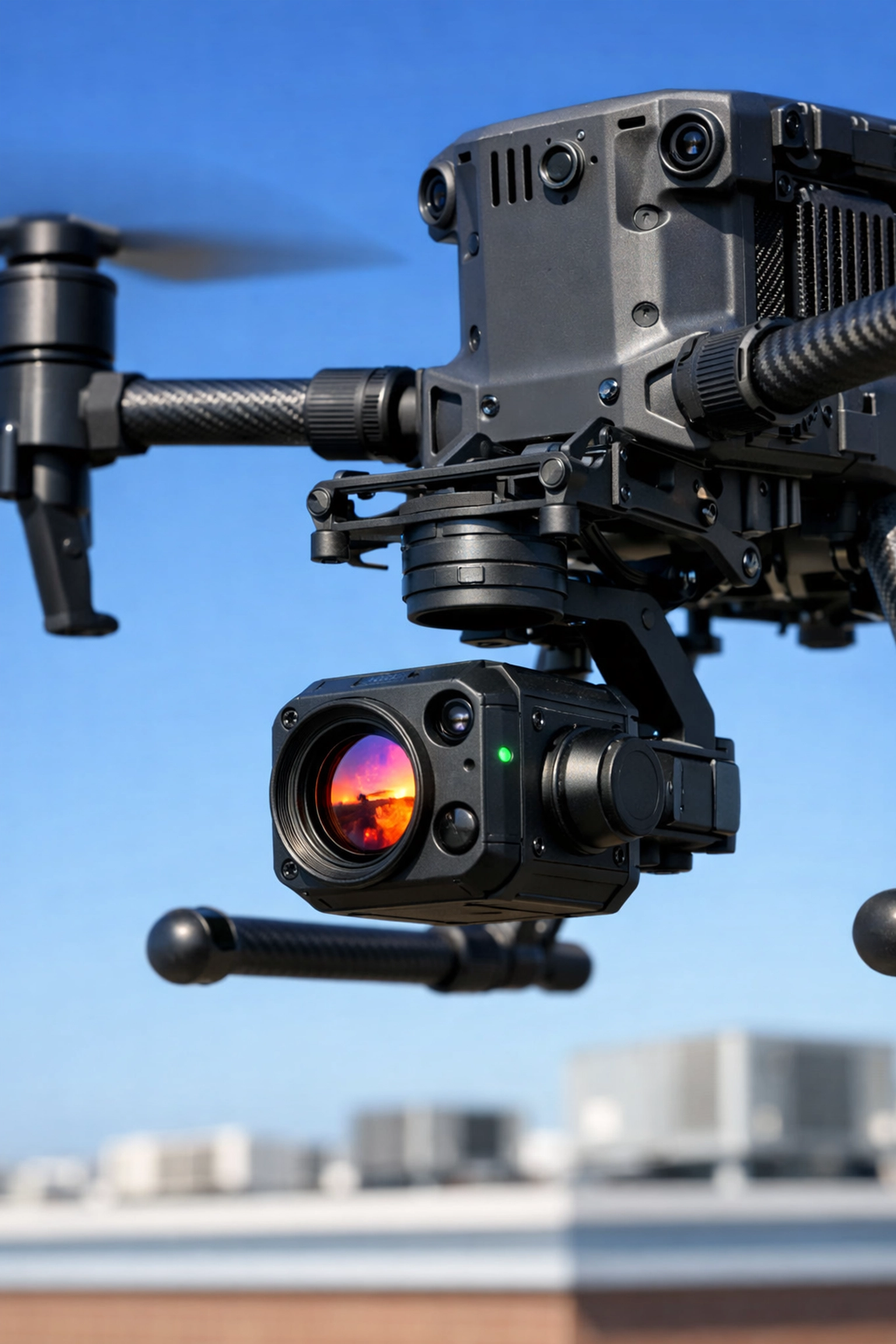
Cape UAV uses enterprise-grade thermal imaging drones equipped with radiometric sensors: not consumer cameras that show pretty color gradients without actual temperature data. Our thermal sensors capture precise temperature measurements at every pixel, creating analyzable data that stands up to engineering scrutiny.
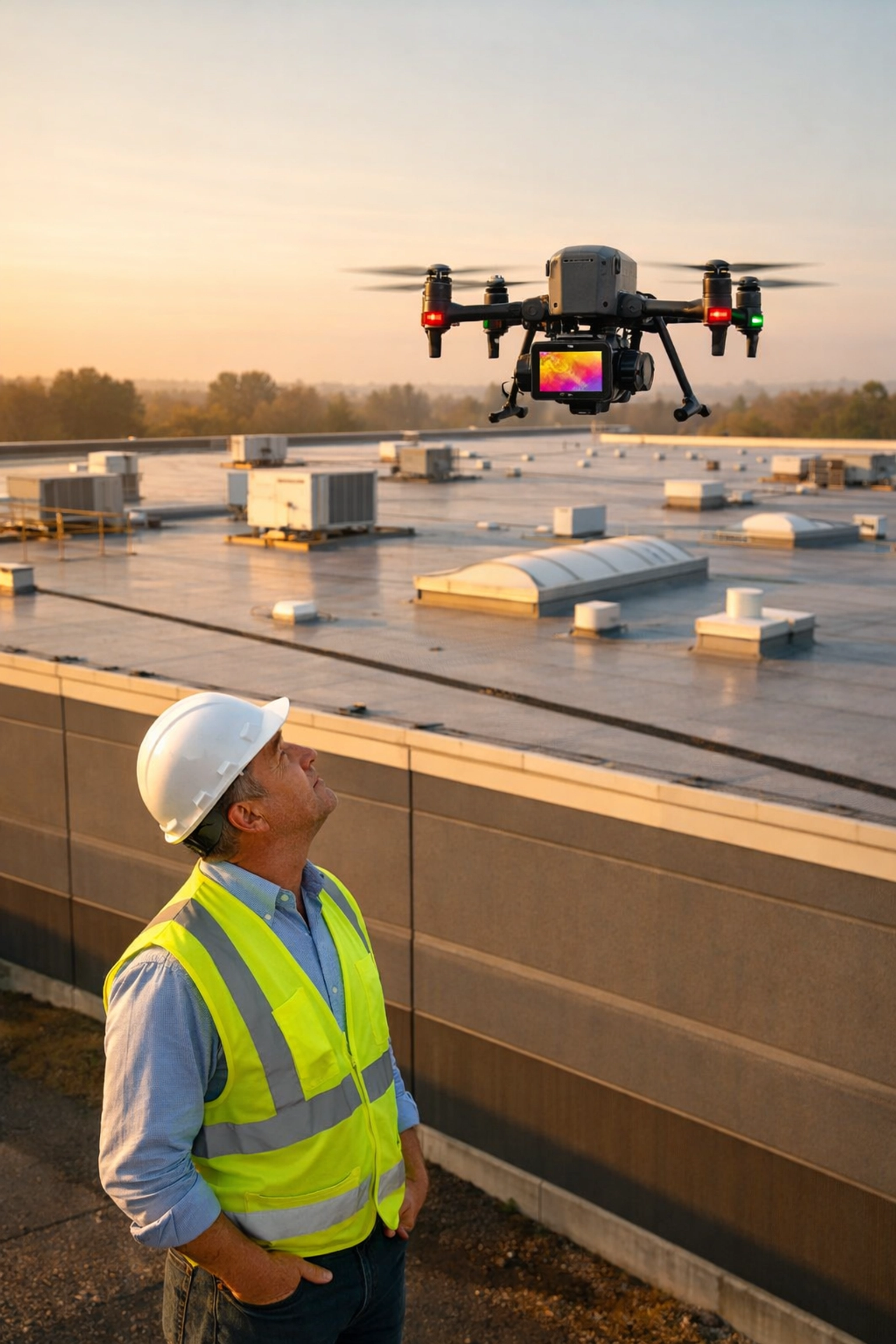
FAA Part 107-certified pilots operate every flight. This isn’t hobbyist photography: it’s precision data collection that requires understanding thermal dynamics, optimal flight parameters, and proper environmental conditions for accurate readings.
Thermal inspections work best during specific conditions:
- Temperature differentials between roof surface and ambient air (typically early morning or late afternoon)
- Clear weather without precipitation for at least 24 hours prior
- Wind speeds below thresholds that affect surface temperature readings
- Proper sun loading on roof surfaces when detecting moisture
Our pilots know these parameters and schedule flights accordingly. Poor timing or improper conditions produce unreliable data: which is worse than no data at all.
ROI: What Thermal Inspections Save
The cost of a thermal roof inspection is a fraction of emergency roof repairs. Most commercial roof failures that require major intervention start as small, undetected problems. Early detection through thermal imaging enables targeted repairs measured in hundreds or low thousands of dollars: not the tens of thousands that full membrane replacements demand.
Consider the typical progression of undetected roof moisture:
- Small membrane puncture or failed seal (repair cost: $200-500)
- Moisture saturation of insulation in a 10×10 area (repair cost: $2,000-4,000)
- Structural deck damage from prolonged moisture exposure (repair cost: $8,000-15,000)
- Interior damage to ceiling, equipment, or inventory (repair cost: $20,000+)
Thermal imaging catches the problem at stage one: before it escalates into expensive repairs.
Beyond immediate repair savings, thermal roof inspections provide:
Extended roof lifespan – Proactive moisture detection and repair adds years to membrane systems. A roof maintained with regular thermal inspections can exceed its design life by 30-50%.
Reduced energy costs – Identifying thermal inefficiencies pays for itself through lower HVAC expenses. Many building owners recover inspection costs within a single heating or cooling season.
Predictable capital planning – Instead of surprise failures requiring emergency budgets, thermal data enables planned maintenance and scheduled replacements. Financial planning with data beats crisis management every time.
Lower insurance claims – Preventing water intrusion means avoiding mold remediation, business interruption, and property damage claims that raise premiums.
When Property Managers Should Use Thermal Roof Inspections
After major weather events – High winds, hail, or heavy snow loading can create damage that’s not immediately visible. Post-storm thermal scans document problems before they worsen.
During due diligence for property transactions – Buyers need accurate roof condition assessments. Thermal imaging provides objective data about hidden problems that visual inspections miss and sellers might not disclose.
As part of preventive maintenance programs – Annual or bi-annual thermal scans catch developing issues early. This proactive approach is standard practice for sophisticated facility management teams.
When energy costs spike unexpectedly – Sudden increases in heating or cooling expenses often indicate envelope failures. Thermal imaging identifies exactly where conditioned air escapes.
Before planning capital improvements – Don’t waste money on premature roof replacements. Thermal data shows whether targeted repairs can extend life or if full replacement is truly necessary.
Beyond Detection: Actionable Documentation
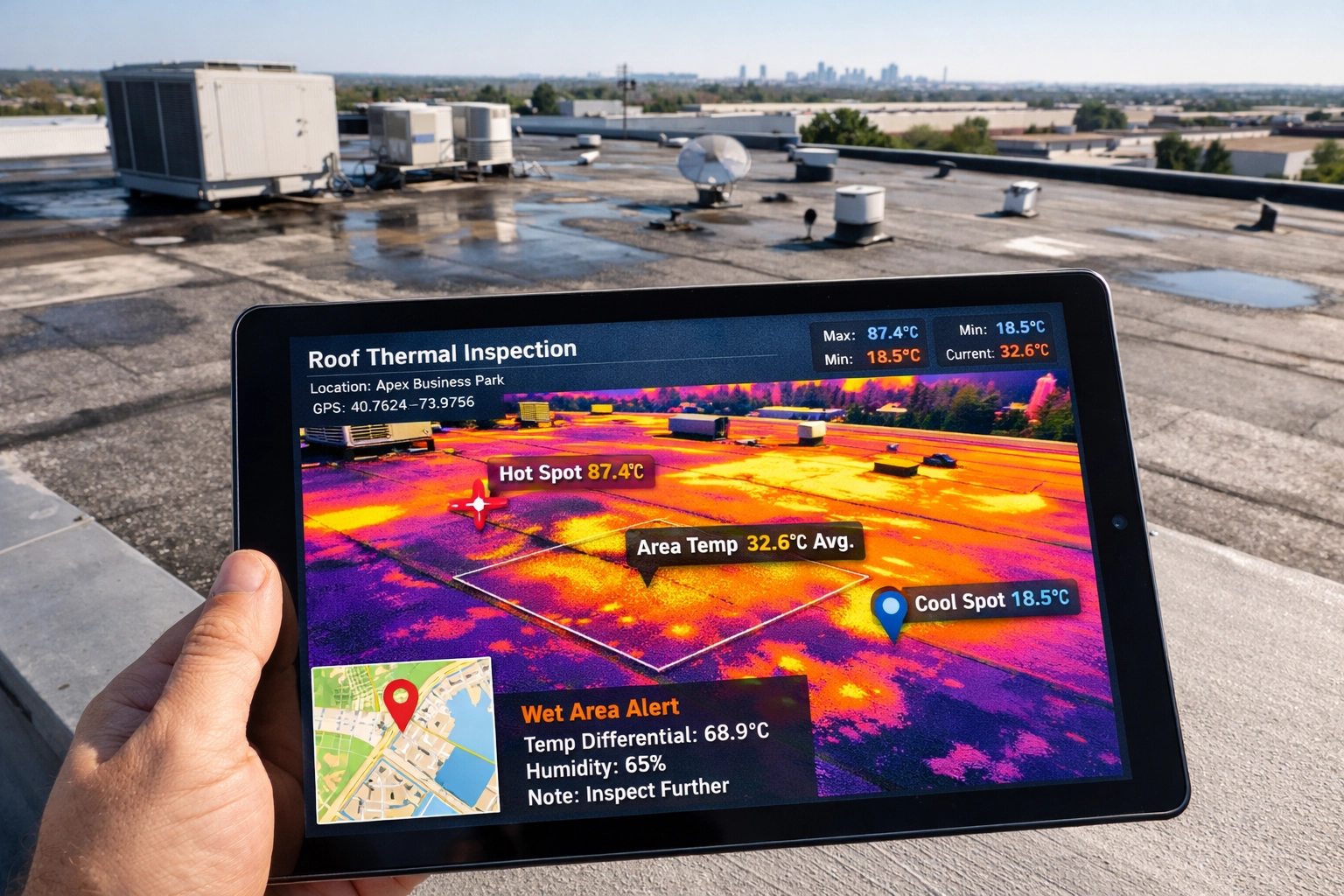
Thermal imaging drone inspection services don’t just identify problems: they create detailed documentation that supports decision-making and contractor management.
Every thermal inspection includes:
- High-resolution thermal and visual imagery of identified anomalies
- Temperature measurement data at problem areas
- GPS coordinates of each issue for precise location reference
- Comprehensive reports that clearly explain findings to non-technical stakeholders
- Before/after documentation for tracking repair effectiveness
This documentation serves multiple purposes: supporting warranty claims, guiding repair contractors to exact problem locations, justifying capital expenditure requests, and providing evidence for insurance claims.
The data doesn’t just tell you there’s a problem: it tells you exactly where it is, how extensive it appears, and what the temperature differentials indicate about severity.
Making Informed Decisions About Your Roof Assets
Most costly roof failures begin as invisible issues: moisture intrusion, insulation breakdown, or membrane delamination that visual inspections simply cannot detect. By the time these problems become visible, the damage is already severe and expensive to remediate.
Thermal imaging roof inspection eliminates uncertainty. It provides objective data about your roof’s actual condition: not assumptions based on age or limited visual assessment. Property managers and facility teams use this data to protect their investments, prevent emergencies, and make evidence-based decisions about maintenance priorities.
The technology works. The question is whether you’ll use it before you need it: or after a failure forces your hand. One approach costs hundreds to thousands. The other costs tens of thousands to hundreds of thousands.
Cape UAV’s thermal imaging services deliver the data you need to make informed decisions about roof maintenance, repair priorities, and capital planning. Enterprise equipment, certified pilots, and comprehensive reporting: so you know exactly what’s happening on your roof before it becomes a crisis.