Most costly failures begin as invisible issues. Water penetration behind intact roofing membranes. Overheating electrical connections that haven't arced yet. Moisture intrusion that won't show surface staining for months. Thermal drone inspections detect these problems before they escalate into emergency repairs, shutdowns, or liability claims: delivering cost avoidance that consistently outweighs inspection fees within a single intervention.
Our gear & credentials (quick): Cape UAV flies fully insured, FAA Part 107–certified missions using an Autel Robotics EVO Lite 6T Enterprise (EVO Lite 640T)—capturing up to 640×512 thermal data and up to 50MP visual imagery. Higher-resolution capture improves documentation, photo-to-thermal correlation, and reporting clarity—while results still depend on site conditions (sun load, wind, rain, emissivity) and post-processing/interpretation.
For property managers, facility maintenance teams, and construction professionals in Southwest Florida, thermal imaging shifts spending from reactive repairs to preventative maintenance. The ROI isn't theoretical. It's measured in avoided roof replacements, prevented electrical failures, and eliminated invasive testing.
Commercial Roofing: Finding Real Problems, Not Cosmetic Wear
Traditional roof inspections rely on visual assessment: identifying surface cracking, ponding water, or membrane degradation. The limitation: most water intrusion occurs beneath the surface, hidden from view until interior damage appears. By that point, saturated insulation, compromised decking, and structural concerns have multiplied repair costs.
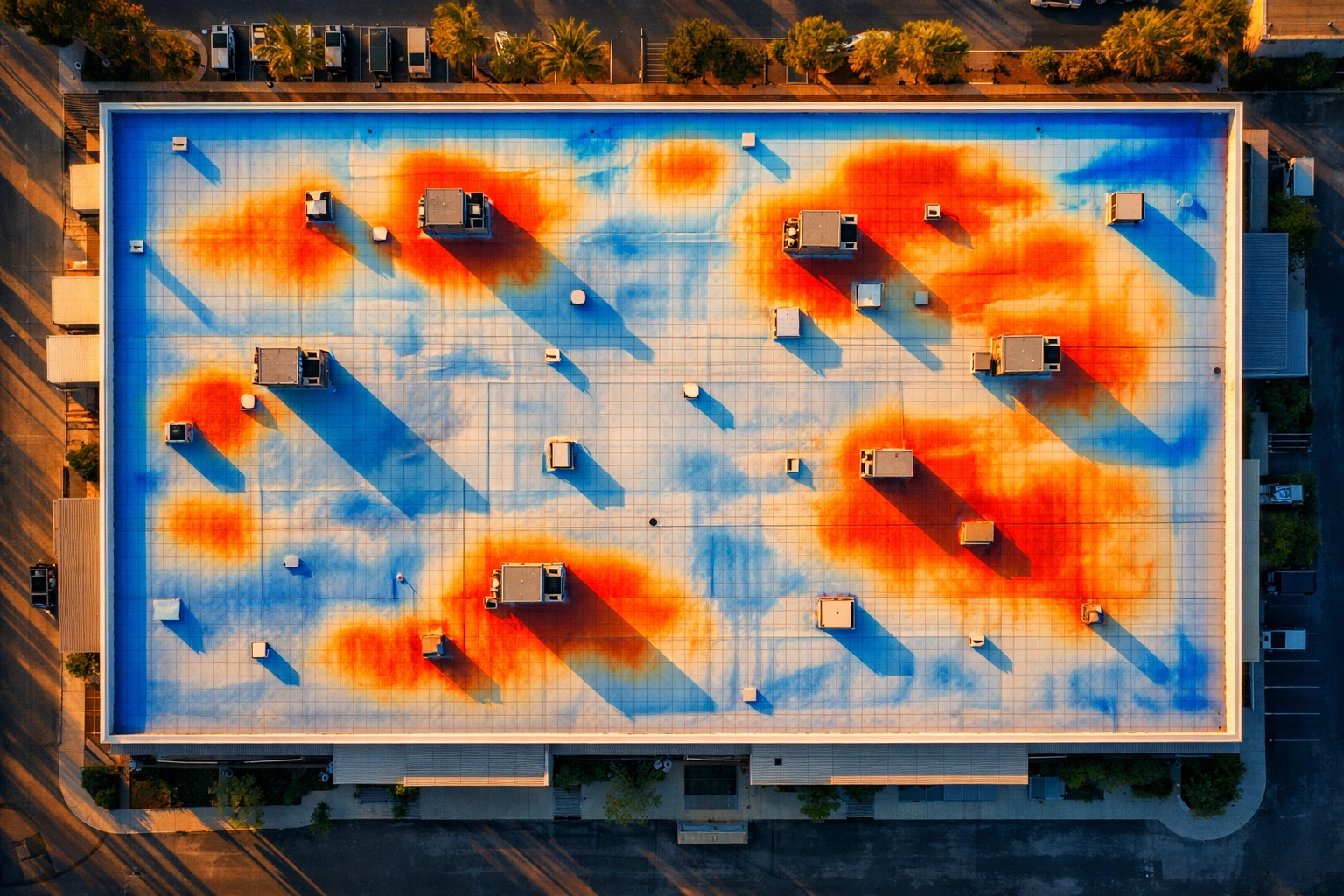
Thermal imaging reveals temperature differentials that indicate trapped moisture. Wet insulation conducts heat differently than dry material—creating thermal signatures visible through intact roofing membranes. Cape UAV captures this data using an Autel Robotics Evo Lite 6T Enterprise with a 640×512 thermal sensor paired with a 50MP visual camera—enterprise-grade resolution that supports clearer anomaly documentation, tighter photo/thermal correlation, and more defensible repair scoping across large commercial structures in single flights.
Why This Matters:
- Avoid unnecessary tear-offs: target repairs only where moisture exists, not where surfaces look weathered
- Eliminate scaffolding and lift costs until thermal data confirms repair locations, saving hundreds of thousands in staging expenses
- Reduce business disruption: inspections complete during operational hours without roof access restrictions
- Extend roof service life through early intervention before moisture reaches structural elements
A 50,000-square-foot commercial building in Cape Coral showed surface membrane wear across 30% of its roof. Thermal imaging identified actual moisture intrusion in just 8% of the area. The property manager avoided a $180,000 full replacement, opting for $32,000 in targeted repairs. The thermal inspection cost: $1,200.
Electrical Systems: Detecting Failures Before They Happen
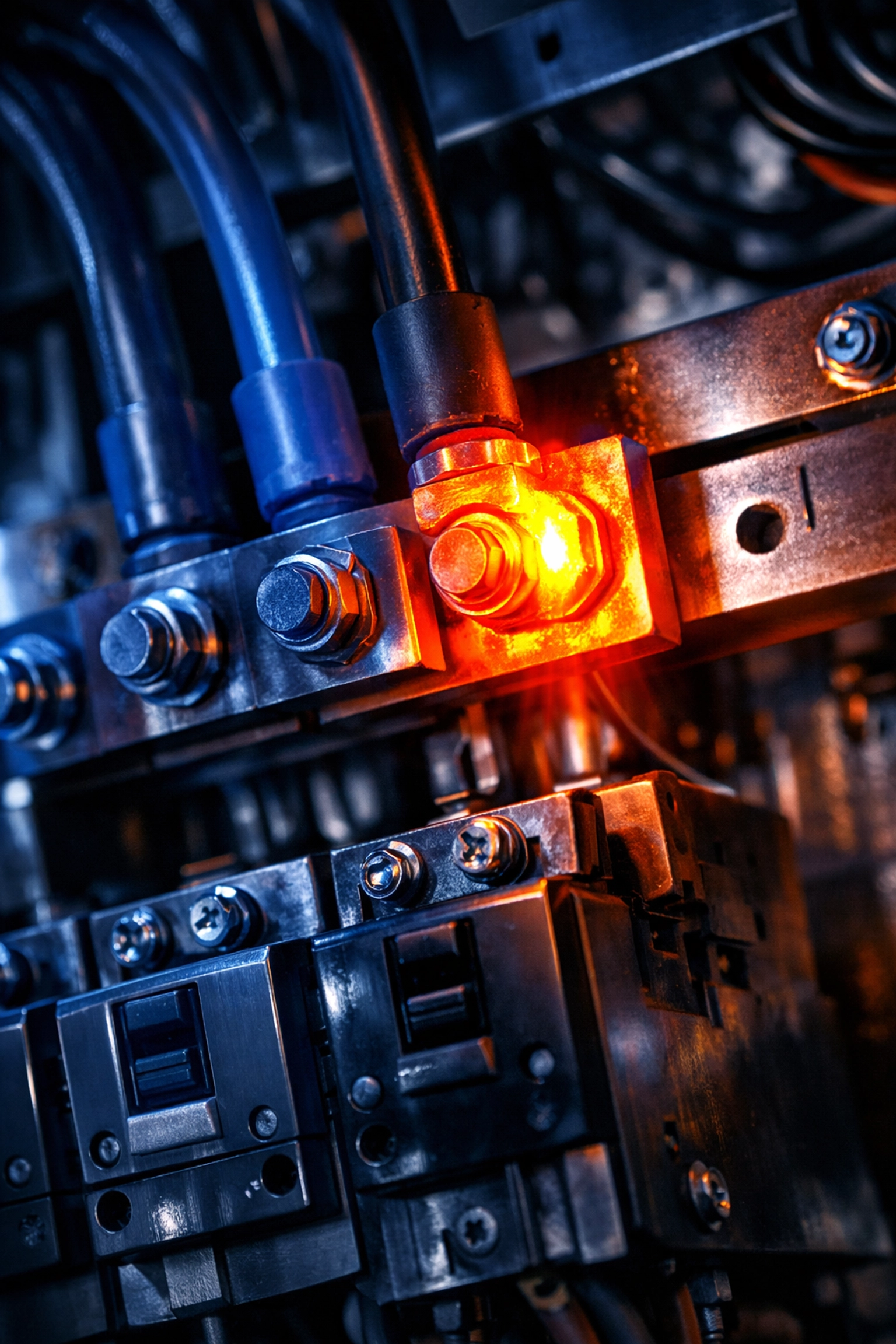
Electrical components fail predictably. Loose connections create resistance. Resistance generates heat. Heat accelerates degradation until the component fails: sometimes catastrophically. Thermal imaging identifies these heat signatures during normal operation, revealing problems invisible to visual inspection and often undetectable until failure occurs.
Power Distribution and Electrical Panels:
Thermal drones inspect electrical infrastructure at scale: substation equipment, switchgear, transformer banks, and rooftop HVAC electrical connections. The imaging detects hot spots indicating overloaded circuits, deteriorating connections, or failing components. For facility managers, this enables scheduled repairs during planned downtime rather than emergency response during operational hours.
Cape UAV performs electrical thermography with an Autel Robotics Evo Lite 6T Enterprise—a platform combining a 640×512 thermal sensor and a 50MP visual camera for high-resolution thermal context plus identification-grade visuals. Inspections document baseline thermal profiles, then track changes over time to identify trend shifts—supporting better maintenance decisions without overstating what thermography alone can confirm.
Premium (when specified in the Statement of Work): area-based radiometric analysis with min/max/avg temperature reporting for defined targets (panels, terminations, rooftop components)—useful for trend tracking and maintenance prioritization. Thermal imagery shows surface temperature differences and may indicate anomalies; results vary by site conditions and it is not a substitute for evaluation by a licensed professional.
ROI Advantage:
Emergency electrical repairs cost 3-5 times more than scheduled maintenance due to after-hours labor, expedited parts, and production downtime. A single prevented failure: a failed transformer, a burnt busbar, an arc fault: typically justifies a year of quarterly thermal inspections.
For linear infrastructure like power lines and cell towers, thermal drones inspect 15-20 miles per day compared to 1-2 miles for traditional ground crews. This efficiency enables comprehensive coverage at lower cost while reducing fall risks for line workers.
Moisture Intrusion Beyond Roofs: Walls, Windows, and Building Envelopes
Florida's humidity and storm-driven rain create constant moisture pressure on building envelopes. Water finds entry points at window flashings, wall penetrations, expansion joints, and stucco cracks: often without visible exterior or interior evidence until mold growth or structural damage appears.
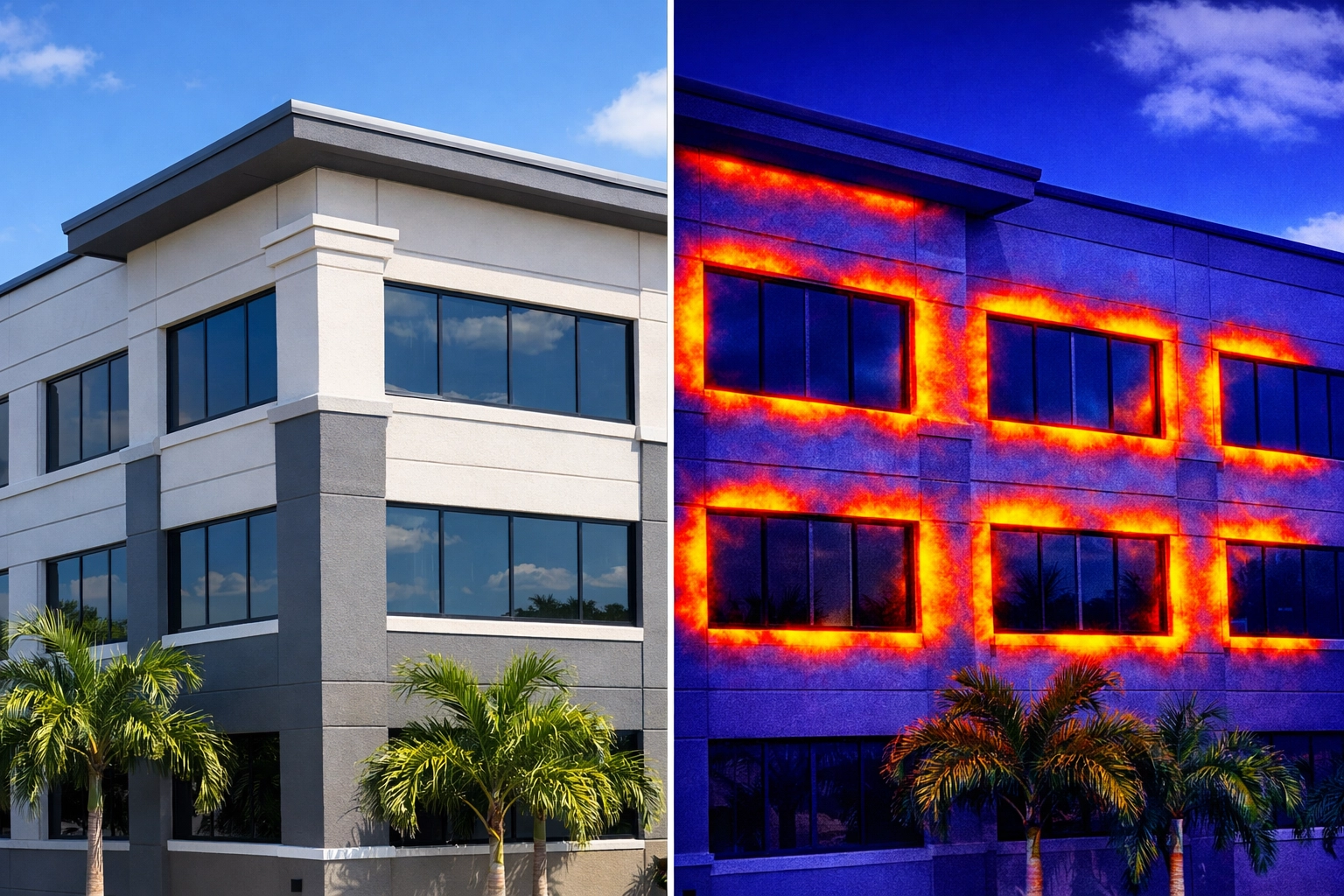
Thermal imaging reveals these intrusions through temperature differentials. Moisture-saturated materials show distinct thermal patterns compared to dry assemblies—especially during temperature transitions (early morning or late afternoon when surfaces respond to changing ambient conditions). Cape UAV’s Autel Robotics Evo Lite 6T Enterprise strengthens this workflow with a 640×512 thermal sensor for higher-detail anomaly mapping and a 50MP visual camera to anchor findings to exact building features for clearer follow-up validation.
Common Detection Scenarios:
- Window and door perimeter leaks where sealant has failed
- Wall cavity moisture from compromised flashing or through-wall penetrations
- Foundation moisture wicking into wall assemblies
- HVAC condensation issues creating hidden moisture accumulation
- Flat roof perimeter details where parapet walls meet roofing membranes
Cape UAV's thermal inspections map these issues across entire building facades in hours, providing documentation that directs invasive testing (like moisture meters or probe investigations) only where thermal anomalies appear. This targeted approach reduces diagnostic costs by 60-70% compared to systematic probe testing across large buildings.
Why Early Detection Matters:
Moisture damage accelerates exponentially. A small leak confined to exterior sheathing becomes a wall cavity issue, then an interior drywall problem, then a mold remediation project. Catching intrusion at the first stage: exterior sheathing: keeps repair costs in the hundreds rather than tens of thousands.
What You Receive: Actionable Reports, Not Just Images
Thermal data requires interpretation. Raw infrared images show temperature patterns, but translating those patterns into maintenance decisions demands expertise. Cape UAV’s reporting is supported by enterprise capture—Autel Robotics Evo Lite 6T Enterprise data from a 640×512 thermal sensor plus a 50MP visual camera—improving image clarity, location certainty, and side-by-side correlation for decision-ready documentation:
Standard Deliverables:
- Georeferenced thermal orthomosaics showing temperature distribution across entire inspection areas
- Annotated thermal images with specific hotspot locations marked and temperature readings documented
- Side-by-side thermal/visual comparison images that correlate infrared signatures with physical features
- Priority-coded findings (critical/moderate/monitor) based on temperature differentials and pattern analysis
- Recommended actions and follow-up inspection intervals
Premium deliverables (optional; when specified in the client’s Statement of Work):
- Area-based radiometric analysis for defined Regions of Interest (ROIs)
- Min/max/avg temperature reporting per ROI for clearer documentation and repeatable comparisons over time
- Exportable tables/appendices aligned to asset IDs for maintenance systems and contractor handoffs
Thermal imagery shows surface temperature differences and may indicate anomalies; results vary by site conditions and it is not a substitute for evaluation by a licensed professional.
Reports integrate with maintenance management systems and provide documentation for insurance claims, warranty disputes, or tenant communications. For multi-site portfolio managers, standardized reporting enables comparison across properties to prioritize capital deployment.
Limitations and When Ground Crews Still Matter
Thermal imaging excels at detection and mapping. It identifies problems and pinpoints locations. What it doesn't do: provide root cause analysis or determine repair methods. Those require hands-on assessment.
When to Combine Thermal with Traditional Methods:
- Invasive confirmation: Thermal indicates moisture presence; moisture meters and probes determine saturation levels and extent
- Component-level electrical work: Thermal identifies hot connections; qualified electricians determine if the issue is torque, corrosion, or component failure
- Structural assessment: Thermal reveals moisture in structural elements; engineers determine if load capacity is compromised
- Immediate repairs: Thermal inspection during active leaks provides documentation, but stopping water requires immediate ground crew response
Cape UAV operates under FAA Part 107 certification with full commercial insurance coverage, meeting requirements for operations over industrial facilities, commercial properties, and active construction sites. For regulated utilities or high-risk environments, we coordinate with ground crews to ensure complete safety protocol compliance.
Weather also affects thermal inspection quality. Heavy rain, high winds, or extreme temperature conditions reduce infrared contrast and can produce misleading data. In Southwest Florida, this typically limits optimal inspection windows to early morning or late afternoon periods during dry weather: but our regional presence enables rapid scheduling when conditions align.
The Southwest Florida Multiplier: Climate Accelerates Everything
Florida's thermal environment makes preventative inspection more valuable, not less. Constant humidity, salt air exposure, intense UV radiation, and storm-driven rain accelerate material degradation across all building systems.
Regional Factors That Increase Inspection ROI:
- Summer heat stress: Rooftop temperatures regularly exceed 160°F, magnifying thermal expansion damage at roof penetrations and seams
- Hurricane moisture: Post-storm building envelopes often sustain hidden damage that doesn't manifest until the next rain event
- Year-round HVAC loads: Electrical and mechanical systems operate continuously with minimal seasonal relief, compressing failure timelines
- Coastal corrosion: Salt air accelerates electrical connection deterioration, making thermal monitoring more critical for power systems
A commercial building in Cape Coral might experience roof moisture intrusion 18-24 months after installation due to thermal cycling stress. The same building in Atlanta might not show issues for 4-5 years. Thermal inspection frequency in Southwest Florida needs to reflect this accelerated timeline.
ROI Summary: What Prevention Actually Costs
Companies using thermal drone inspections report 30-50% cost savings compared to traditional inspection methods combined with reactive maintenance approaches. The calculation is straightforward:
Annual thermal inspection program: $3,000-$8,000 depending on facility size and complexity
Typical prevented failure (single incident): $15,000-$75,000 in emergency repairs, downtime, and secondary damage
Break-even: One prevented incident every 2-3 years
For facilities with multiple roof sections, extensive electrical infrastructure, or moisture-sensitive operations (data centers, warehouses, manufacturing), the math becomes more compelling. Each additional prevented failure multiplies program value.
Cape UAV structures thermal inspection programs around your maintenance cycles: quarterly reviews for critical systems, annual assessments for standard commercial properties, or one-time diagnostic investigations when problems are suspected but not yet visible.
The question isn't whether thermal inspection saves money. It's whether you identify problems on your timeline or theirs.
Autel Robotics is a trademark of its respective owner. Cape UAV is not affiliated with or endorsed by Autel.