
Thermal imaging has revolutionized how we maintain industrial assets, but not all thermal data is created equal. For solar farm operators and commercial property managers in Southwest Florida, the difference between a successful inspection and a missed fault often comes down to a single technical specification: pixel pitch. In the world of high-end aerial thermography, the transition from older 17um (micrometer) sensors to modern 12um sensors has fundamentally changed the level of detail available to decision-makers.
At Cape UAV, we utilize the Autel Robotics EVO Lite 6T Enterprise (EVO Lite 640T) platform, which features a 640×512 thermal sensor with a 12um pixel pitch. This isn't just a marginal upgrade; it is a critical requirement for identifying the micro-anomalies that precede total system failure.
Understanding the Physics: What is 12um Resolution?
In thermal imaging, the "pixel pitch" refers to the distance between the centers of two adjacent pixels on the detector array. It is measured in micrometers (um). A smaller pixel pitch, such as 12um, allows more pixels to be packed into the same physical sensor area compared to the previous industry standard of 17um.
Why This Matters
A 12um pixel pitch delivers significantly sharper thermal detail and superior spatial resolution. In practical terms, this means the drone can fly at a safer, more efficient altitude while still capturing the same level of granular detail that a lower-resolution sensor would require a much lower (and riskier) flight path to achieve.
- Increased Spatial Resolution: Better ability to distinguish between two objects that are close together.
- Greater Detection Range: Identifying heat signatures from further away without losing clarity.
- Reduced Motion Blur: Faster processing of thermal data as the drone traverses the solar array.
Why 12um is Essential for Solar Inspections
Solar panels are comprised of individual cells, each of which is a potential point of failure. When a cell fails or becomes damaged: often due to micro-cracks, bird droppings, or internal electrical resistance: it generates heat. This is known as a "hotspot."
Using a standard thermal sensor might reveal that a panel is "warm," but a 12um sensor reveals exactly which cell is failing. This level of precision is the difference between a technician replacing a single module and a maintenance team wasting hours hunting for a phantom fault across an entire string.
Detection of Micro-Anomalies
Many solar defects start small. A bypass diode failure or a single cracked cell might only show a temperature differential of a few degrees. 12um sensors, when paired with a high NETD (Noise Equivalent Temperature Difference) rating, can visualize these subtle gradients. Without this resolution, small hotspots "bleed" into surrounding pixels, effectively disappearing into the background heat of the panel.
Identifying String and Inverter Issues
Solar arrays are wired in series. A failure in one panel can often affect the output of an entire string. High-resolution thermal mapping allows us to see the "big picture" of the site's electrical health. We can identify entire strings that are offline or underperforming simply by observing the uniform thermal signature across dozens of panels simultaneously.
The ROI Advantage: Turning Data into Dollars
For B2B construction firms and industrial facility managers in Cape Coral and the surrounding Southwest Florida region, drone-based thermal inspections are about ROI. Traditional manual inspections are slow, dangerous, and often incomplete.
Proactive Maintenance vs. Reactive Repair
Thermal imaging reveals anomalies before they escalate into expensive repairs or fire hazards. By identifying a failing inverter or a shorted cell early, you avoid the cost of unplanned downtime. In a commercial solar environment, even a 5% drop in efficiency due to undetected faults can translate to thousands of dollars in lost revenue over a single quarter.
Speed and Scalability
An FAA Part 107 certified pilot can inspect a multi-acre solar installation in a fraction of the time it takes a ground crew with handheld thermal cameras. This speed allows for more frequent inspections, providing a longitudinal view of asset health that supports long-term facility planning and budgeting.
| Feature | Standard Thermal (17um) | Enterprise Thermal (12um) |
|---|---|---|
| Detail Level | Moderate; cell-level blur | High; distinct cell-level clarity |
| Flight Efficiency | Must fly lower for detail | Can fly higher/faster with clarity |
| Fault Detection | Major hotspots only | Micro-cracks and subtle anomalies |
| Data Utility | General overview | Precision diagnostic tool |
Equipment Matters: The Autel EVO Lite 6T Enterprise
At Cape UAV, we believe that the quality of the data is only as good as the hardware used to capture it. We rely on the Autel Robotics EVO Lite 6T Enterprise (EVO Lite 640T). This platform is specifically designed for industrial workflows where accuracy is non-negotiable.
Technical Specifications of the EVO Lite 640T:
- Thermal Sensor: 640×512 resolution
- Pixel Pitch: 12um
- Visual Camera: 50MP for high-resolution orthomosaics and side-by-side visual/thermal comparisons
- Radiometric Data: Each pixel captures a specific temperature value, allowing for post-flight analysis and detailed reporting.
This combination of a high-resolution 50MP visual camera and a 640-grade thermal sensor allows us to provide "Picture-in-Picture" reports. When we find a thermal anomaly, we can immediately cross-reference it with a high-resolution visual photo to see if the heat is caused by a physical defect (like a crack) or an environmental factor (like debris).
Note: Autel Robotics is a trademark of its respective owner; Cape UAV is not affiliated with or endorsed by Autel Robotics.
Thermal Mapping for Facility Management
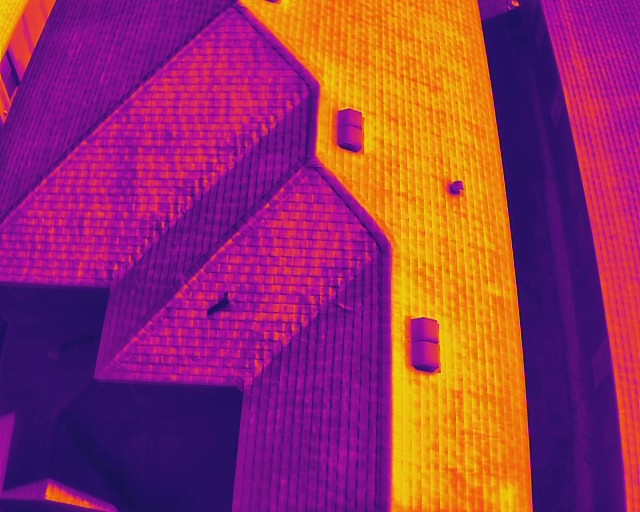
Beyond solar panels, 12um thermal resolution is a game-changer for overall facility maintenance and construction site management. In Southwest Florida, the intense heat and humidity put extreme stress on building envelopes and electrical systems.
Identifying Opportunities for Efficiency
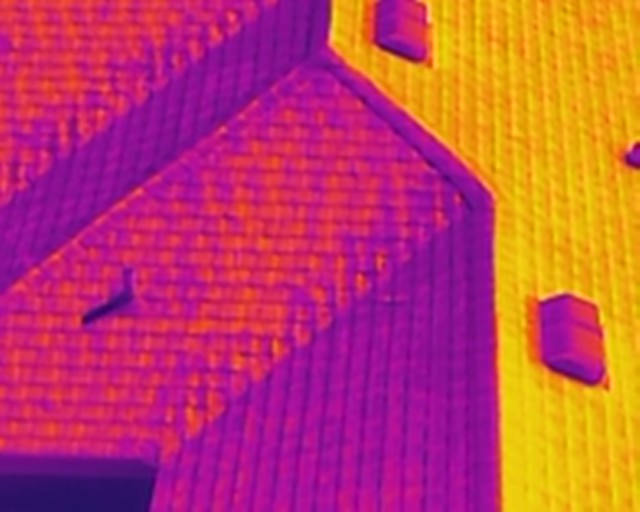
Our thermal inspections help property managers identify opportunities for energy efficiency by locating areas of significant heat loss or gain. On a commercial rooftop, this might look like a saturated patch of insulation that is invisible to the naked eye but glows brightly on a 12um thermal map. Addressing these "silent" issues supports a more sustainable and cost-effective operation.
Construction Site Oversight
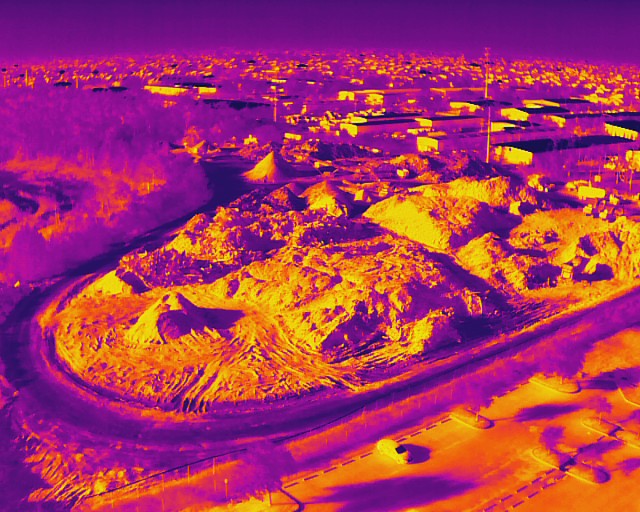
During the construction phase, thermal imaging can be used to monitor the curing of concrete or to ensure that electrical systems are commissioned correctly before they are closed up behind walls. This provides an extra layer of documentation that protects contractors and owners alike.
Important Disclaimer
Thermal results indicate anomalies and are not a substitute for evaluation by a licensed professional. Our data is for planning purposes and is not a substitute for a licensed land survey.
The Cape UAV Standard: Safety and Compliance
Operating high-tech drones in the busy airspace of Southwest Florida requires more than just a drone: it requires expertise. Every mission we fly is conducted by an FAA Part 107 certified pilot who understands the legal and technical nuances of aerial data collection.
We focus on delivering high-resolution orthomosaics and 3D models that provide project stakeholders with a complete digital twin of their assets. Whether you are managing a new land development project in Cape Coral or overseeing a massive industrial warehouse, our thermal-first approach ensures that you are seeing the full picture: including the heat signatures that stay hidden from everyone else.
The ROI of Thermal Visibility:
- Reduced Liability: Identify electrical fire risks before they manifest.
- Documentation: Create a historical record of asset condition for insurance and warranty claims.
- Decision Confidence: Base your maintenance schedule on hard data rather than guesswork.
Conclusion: Data You Can Act On
The shift to 12um thermal resolution isn't about following a trend; it's about providing the highest possible standard of care for commercial and industrial assets. In the demanding environment of Southwest Florida, "good enough" resolution often means missing the very problems you are looking for.
By leveraging the Autel EVO Lite 6T Enterprise and its 12um sensor, Cape UAV delivers the clarity, confidence, and control required to manage modern infrastructure. We don't just take pictures; we provide the technical insights that protect your bottom line and keep your operations running at peak performance.
If you are ready to see what's happening beneath the surface of your solar array or commercial facility, it’s time to move beyond standard imaging. The secret is in the pixels.
Important Disclaimer
Thermal results indicate anomalies and are not a substitute for evaluation by a licensed professional. Our data is for planning purposes and is not a substitute for a licensed land survey.