For a commercial property owner or facility manager in Southwest Florida, a solar array is more than just "green energy": it is a significant capital investment designed to hedge against rising utility costs. However, when the monthly production reports start trending downward, the cause is rarely visible from the ground. Traditional inspections involve technicians climbing ladders and manually testing strings with multimeters: a process that is time-consuming, expensive, and often dangerous.
At Cape UAV, we utilize enterprise-grade technology like the Autel Robotics EVO Lite 6T Enterprise (EVO Lite 640T) to bring transparency to solar performance. Equipped with a 640×512 thermal sensor and a 12um pixel pitch, our drones identify thermal anomalies that indicate failure points invisible to the human eye.
If your array isn't hitting its projected numbers, here are the 10 most common culprits and how high-resolution thermal imaging spots the fix.
1. Internal Cell Defects and Microcracks
Solar cells are fragile. During installation, maintenance, or extreme weather events, microscopic cracks can form within the silicon. These microcracks restrict the flow of electrons, creating resistance that manifests as heat.
Why It Matters:
Left unchecked, these microcracks expand due to thermal cycling (the constant heating and cooling of the day). Eventually, they can lead to complete cell failure.
The Thermal Fix:
Using the 12um pixel pitch sensitivity of the EVO Lite 640T, we can detect minute temperature differentials. A microcrack appears as a localized "hot spot" on an otherwise uniform panel surface. We provide the visual proof needed to file a warranty claim before the panel goes dark.
2. Inverter Malfunctions and String Failures
The inverter is the heart of your solar system. If a single inverter or an entire "string" of panels fails, your production drops off a cliff. While your monitoring software might tell you production is down, it won't tell you where the break in the circuit is located.
Why It Matters:
Losing a whole string means 10–20% of your array could be sitting idle while you still pay full price for grid power.
The Thermal Fix:
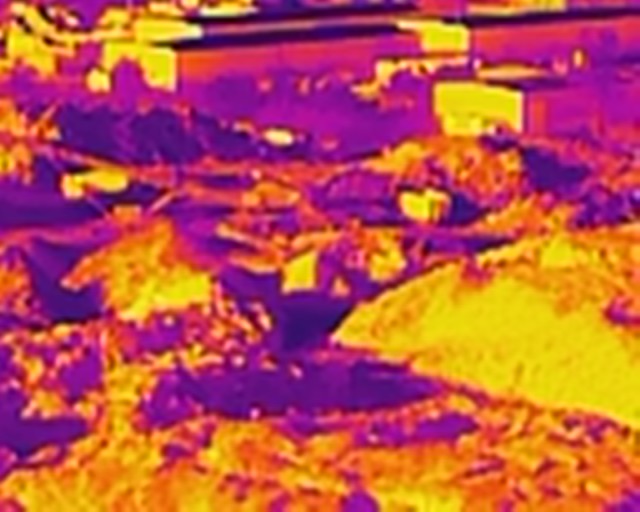
A dead string has a distinct thermal signature. Because the panels aren't converting sunlight into electricity, that energy is instead absorbed as heat. A drone flight over the array reveals an entire row of panels glowing significantly brighter (hotter) than the active ones, pinpointing the exact electrical disconnect in minutes.
3. Potential Induced Degradation (PID)
PID is a silent killer of solar efficiency. It occurs when a voltage potential difference between the solar cells and the frame causes ions to migrate, disrupting the cell's ability to generate power.
Why It Matters:
PID usually starts at the ends of a string near the poles and works its way inward. It can reduce the power output of a commercial array by up to 30% over just a few years.
The Thermal Fix:
PID creates a specific "checkered" pattern on thermal imagery. By identifying this signature early, facility managers can work with engineers to install PID-reversing equipment or adjust grounding, potentially saving the entire array from premature aging.
4. Bypassed Diode Failures
Every solar panel has bypass diodes that allow electricity to flow around a shaded or damaged section of the panel. If a diode fails, it can either "open" the circuit (killing the panel) or stay "closed," which forces the panel to work harder and overheat.
Why It Matters:
A faulty diode doesn't just lower output; it creates a massive fire risk. The heat generated by a shorted diode can melt the backsheet of the panel.
The Thermal Fix:
Thermal drones identify these as distinct "stripes" of heat across a panel. Instead of a single hot spot, you’ll see a perfectly rectangular section of the panel running 10–20 degrees hotter than the rest.
5. Heavy Soiling and Debris Accumulation
In Southwest Florida, we deal with salt spray, pollen, and construction dust. While "dirty panels" sounds like a minor issue, uneven soiling can lead to localized hotspots.
Why It Matters:
When one part of a cell is covered in bird droppings or thick dust, it acts as a resistor. The rest of the cell tries to push current through that "clog," causing the obstructed area to overheat.
The Thermal Fix:
Our 50MP visual camera captures high-resolution imagery of the physical debris, while the thermal sensor confirms if that debris is causing a damaging temperature spike. This allows you to prioritize cleaning schedules based on actual performance impact rather than guesswork.

6. Shading from New Obstructions
Vegetation growth or new rooftop equipment (like HVAC units) can cast shadows that weren't there during the initial install.
Why It Matters:
Even a small shadow can disproportionately tank the output of an entire string.
The Technical Advantage:
By creating high-resolution aerial maps, we can analyze the "shadow path" throughout the day. This helps property managers decide if it's time to trim the treeline or relocate a vent pipe that is costing them thousands in lost energy.
7. Faulty Wiring and Corroded Connections
Commercial arrays involve miles of DC cabling. In our humid, salty environment, connectors can corrode or loosen over time, increasing electrical resistance.
Why It Matters:
High resistance equals high heat. This is the leading cause of electrical fires in commercial solar installations.
The Thermal Fix:
Thermal imaging excels at finding "hot terminations." A loose bolt or a corroded MC4 connector will glow like a beacon on a 640×512 thermal map. Identifying these allows for proactive maintenance during scheduled downtime rather than emergency repairs after a fire.
8. Physical Damage (Hail or Impact)
While modern panels are rated for impact, Southwest Florida storms can throw debris that causes internal fracturing.
Why It Matters:
You might look at a panel from the ground and see no glass breakage, but the internal silicon could be shattered.
The Thermal Fix:
Standard photography won't show internal fractures. Thermal imaging reveals the "shatter pattern" of heat where the impact occurred, providing the documentation required for insurance or manufacturer warranty claims.
9. Poor Initial Commissioning
Sometimes, the system was never performing correctly from Day 1. Substandard installation or incorrect stringing can leave a system underperforming for years without the owner knowing.
Why It Matters:
If you don't have a baseline, you don't know what you're missing.
ROI Advantage:
A post-installation drone survey provides a "birth certificate" for your array. It confirms every panel is active and every connection is cool. If we find issues, you can hold the installer accountable before the final check is cut.
10. Thermal Cycling and Aging
Components naturally degrade, but they don't always degrade at the same rate. One "bad apple" panel can drag down the performance of an entire string.
Why It Matters:
Identifying the specific panels that are aging prematurely allows for targeted replacement rather than a costly "tear-off and replace" of the whole system.
The Solution:
Annual thermal inspections create a historical record. We can track temperature trends over years, identifying components that are beginning to drift toward failure.
Why Thermal Drones are the Industry Standard
Manual inspection of a 1MW rooftop array can take days. A Part 107-certified pilot from Cape UAV can cover that same area in under an hour.
| Feature | Manual Inspection | Cape UAV Thermal Drone |
|---|---|---|
| Speed | Days | Minutes/Hours |
| Safety | High risk (Ladders/Voltage) | Low risk (Ground-based) |
| Detail | Sample-based testing | 100% array coverage |
| Cost | High labor costs | Significant cost savings |
| Data | Handwritten notes | High-res thermal/visual maps |
Important Disclaimer: Thermal results indicate anomalies and are not a substitute for evaluation by a licensed professional. Our data is for planning purposes and is not a substitute for a licensed land survey.
The ROI of Proactive Inspection
For commercial facility managers, the ROI of a drone-based solar inspection is clear:
- Maximize Production: Find and fix the "invisible" issues stealing your energy.
- Reduce Fire Risk: Identify overheating connectors before they ignite.
- Warranty Support: Use high-resolution thermal data to prove panel failure to manufacturers.
- Labor Savings: Eliminate the need for technicians to spend hours on a hot roof manually testing every panel.
Cape UAV provides the technical expertise and enterprise-grade equipment: including the Autel EVO Lite 640T: needed to keep Southwest Florida’s commercial solar arrays running at peak efficiency.
Important Disclaimer: Thermal results indicate anomalies and are not a substitute for evaluation by a licensed professional. Our data is for planning purposes and is not a substitute for a licensed land survey.
Autel Robotics is a trademark of its respective owner; Cape UAV is not affiliated with or endorsed by Autel Robotics. Results of all aerial inspections depend on environmental conditions and site access.